The match manufacturing industry is one of the oldest yet most precise sectors of the chemical industry, built on a delicate balance between combustible materials and oxidising agents. Prior to modern matches, generating fire required laborious mechanical methods or highly unstable, hazardous chemical mixtures. The discovery and adoption of potent oxidisers marked a turning point in the safety and efficiency of this sector. Within this context, the use of potassium chlorate in match manufacturing holds an irreplaceable position, such that contemporary safety match head formulations are fundamentally engineered around the unique properties of this inorganic salt.
Potassium chlorate is a crystalline compound with powerful oxidising properties, capable of releasing substantial volumes of oxygen at high velocities upon exposure to an initial ignition source. This rapid kinetic behaviour is the key to clean, instantaneous match ignition. A thorough understanding of its chemical nature, exothermic reaction mechanisms, and process safety controls is essential for chemical engineers and production line managers alike.
What Is Potassium Chlorate and How Does Its Chemical Structure Work?
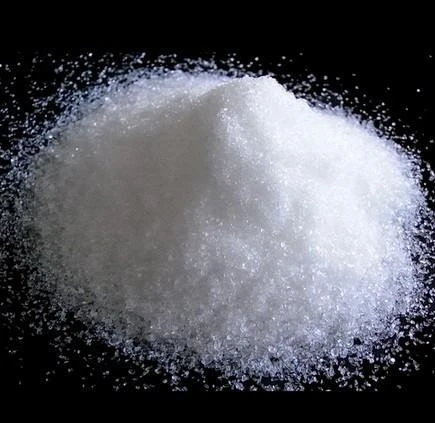
Potassium chlorate ($KClO_3$) is an inorganic salt composed of potassium cations and chlorate anions arranged in a stable crystalline lattice. As an active oxidiser, it exhibits a strong tendency to release oxygen when supplied with initial activation energy or in the presence of catalysts. The thermal decomposition of potassium chlorate is an exothermic process that, once initiated, supplies the oxygen required to sustain the combustion of adjacent fuels.
To manufacture this valuable chemical compound, processing industries rely on potassium derivatives. For instance, the mineral salt potassium chloride serves as a vital raw material in the electrochemical synthesis of chlorates, an application analysed in detail in our article on potassium chloride applications in the chemical industry. The purity of the resulting potassium chlorate directly influences the stability of sensitive formulations.
The Role and Application of Potassium Chlorate in Match Manufacturing
The primary factor defining the use of potassium chlorate in match manufacturing is its capacity to deliver concentrated oxygen directly to the reaction zone. Igniting sulphur or other reducing agents in ambient air demands high temperatures; however, incorporating potassium chlorate into the match head composition substantially lowers the required activation energy. In effect, this compound acts as a localised, micro-scale oxygen source.
Potassium chlorate constitutes the bulk of the dry mass in match head paste, ensuring sufficient oxidiser is in direct physical contact with every mole of fuel. This architecture ensures that the initial spark swiftly transitions into a stable flame, even in humid environments or local atmospheric oxygen deficits. While other oxidisers such as potassium nitrate offer higher thermal stability, their slower oxygen release rates make them burn-rate modifiers in specific formulations rather than the primary ignition agent in match heads.
Combustion Chemistry Mechanisms in Safety Matches
In modern safety matches, reactive raw materials are segregated into two distinct components. The match head contains potassium chlorate as the oxidiser alongside fuels such as sulphur or resins, whereas the friction surface on the matchbox striking strip contains red phosphorus and powdered glass. This deliberate separation dramatically enhances handling and storage safety.
When the match head strikes the abrasive strip, mechanical friction generated by the glass particles elevates the local temperature. This thermal energy converts a minute quantity of red phosphorus into highly unstable white phosphorus. The resulting phosphorus ignites spontaneously in contact with air, and the heat from this primary combustion initiates the rapid decomposition cascade of potassium chlorate:
- Mechanical friction converted to localised heat by abrasive particles
- Transformation of red phosphorus on the striking strip to white phosphorus, followed by instantaneous ignition
- Transfer of activation energy to potassium chlorate, releasing active oxygen
- Rapid combustion of sulphur and organic binders, transferring heat to the wooden splint
Within a fraction of a second, the flame generated by this reaction chain delivers sufficient heat to ignite the wooden matchstick.
Match Head Paste Formulation Components Alongside Potassium Chlorate
Although potassium chlorate serves as the core ignition agent, reliable match performance relies on the synergistic combination of several chemical additives. If potassium chlorate were combined solely with fuel, the reaction would be dangerously explosive or erratic. Consequently, match head paste is an engineered multi-component system in which every ingredient performs a defined function:
- Oxidiser: Potassium chlorate in high weight percentages to supply rapid oxygen.
- Fuels and Reducing Agents: Sulphur, natural resins, or antimony trisulphide to sustain the flame and provide thermal input.
- Modifiers and Fillers: Powdered glass, diatomaceous earth, or metal oxides to regulate burn rate, provide ash structural integrity, and prevent molten droplets from dripping.
- Binders: Animal gelatin or technical adhesives that uniformly bond solid particles to the wooden splint.
- Pigments: Inorganic colourants providing visual identity and commercial differentiation for the match head.
Beyond the head formulation, the matchstick body requires dedicated chemical treatment. To prevent hazardous afterglow—where the ember remains incandescent after the flame goes out—wooden splints are impregnated with solutions such as monoammonium phosphate. This process, detailed in our guide on monoammonium phosphate in flame retardants, highlights the critical role of holistic chemical design in modern match production.
Differences in Potassium Chlorate Behaviour: Safety Matches vs. Strike-Anywhere Matches
Matches are functionally categorised into safety matches and strike-anywhere matches. The distinction lies primarily in how chemicals are positioned relative to potassium chlorate. In strike-anywhere matches, potassium chlorate in the tip is formulated directly alongside phosphorus sesquisulphide ($P_4S_3$). This intimate contact allows friction against any rough surface to generate enough heat to trigger the reaction cascade.
Conversely, in safety matches, the friction-sensitive phosphorus component is omitted entirely from the match head and applied exclusively to the striking strip on the box to prevent accidental ignition during transport and storage. As a result, potassium chlorate in safety matches forms a far more stable, transport-safe system, undergoing rapid oxidation only when brought into contact with the phosphorus-bearing striking surface.
Safety Challenges and Technical Requirements on Potassium Chlorate Production Lines
Handling potassium chlorate in industrial environments demands rigorous process safety and engineering protocols. Due to the inherent reactivity of chlorates toward reducing agents, inadvertent contact with organic dust, oils, or powdered metals can cause spontaneous ignition or violent deflagration. Match manufacturing lines must follow strict operational procedures across material transfer, mixing, and drying stages.
A critical stage in processing is powder blending. Dry potassium chlorate powder must never be mechanically milled dry with sulphur or other combustible fuels; the slightest frictional heating or electrostatic discharge in dry mixers can provoke severe explosions. For this reason, potassium chlorate is blended into the batch only after being wetted or suspended within a liquid, gelatinous binder phase. Furthermore, storage facilities must feature continuous ventilation, controlled temperatures, and strict segregation from strong acids such as sulphuric acid or nitric acid, as concentrated acids react with chlorates to generate unstable, explosive gases.
Quality Control Considerations and Raw Material Specifications for Match Making
To maintain consistent performance on modern high-speed match production lines, the chemical and physical specifications of potassium chlorate are critical. Particle size distribution (mesh size) and moisture content are two decisive variables governing the density and rheology of the match head dipping slurry. Coarse particles slow heat transfer rates and cause the ignited head to shatter, whereas excessively fine particles alter paste viscosity, increasing water and binder demand.
Procurement and quality assurance teams in match plants routinely verify oxidiser purity and insoluble matter thresholds. Heavy metal contaminants can compromise chemical stability or cause unwanted hygroscopicity in the finished match heads. Consequently, sourcing this inorganic chemical requires certified suppliers providing moisture-barrier packaging to ensure continuous operational reliability.
Summary
Technical evaluation confirms that the use of potassium chlorate in match manufacturing remains the foundation of modern match production, owing to its exceptional thermodynamic and kinetic performance in releasing oxygen. Formulated alongside polymeric binders, regulated fuels, and anti-afterglow agents, it delivers a precise balance between fast ignition and consumer safety. Accurate rheological control of the paste and rigorous plant safety standards ensure uninterrupted production line efficiency and consistent flame performance across traditional and modern lighting applications.