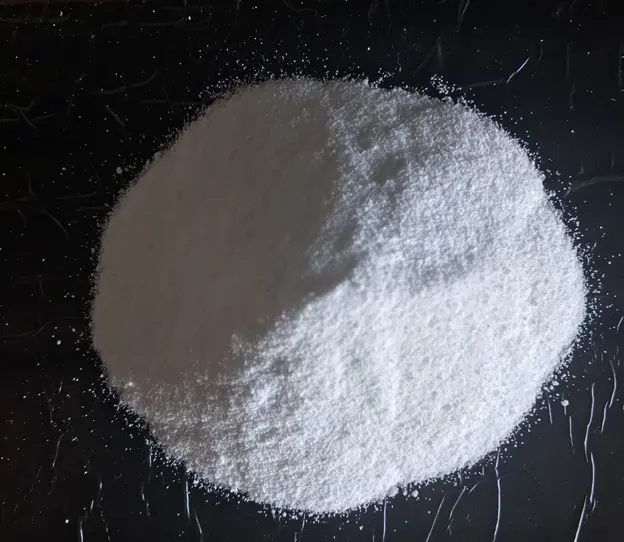

Potassium chloride (KCl) is one of the most fundamental compounds among inorganic salts. Although the majority of global production is consumed as fertilizer in agriculture, an in-depth examination of its value chain reveals that the application of potassium chloride in the chemical industry plays a strategic, indispensable role in manufacturing intermediate and end-use products. Its stable ionic lattice, high water solubility, and reactive potassium cation make this salt an essential building block in industrial production lines.
Procurement managers, R&D specialists, and chemical process engineers understand that selecting the appropriate chemical grade directly impacts reaction yields. Below, we examine the technical and industrial dimensions of utilizing this compound across various sectors.
The Role of Potassium Chloride as a Precursor in Potassium Compound Synthesis
The primary application of potassium chloride in the chemical industry is serving as raw feedstock for producing other potassium salts and bases. Naturally occurring potash reserves exist predominantly in chloride form; therefore, accessing other potassium compounds requires chemical conversion routes initiated from this salt.
Chemical manufacturers synthesize a broad spectrum of derivatives via double-displacement reactions, electrochemical routes, and acid-base neutralization. These derivatives serve as critical precursors in glass manufacturing, industrial soaps, pigments, and pharmaceuticals. Without stable supply chains of potassium chloride, downstream manufacturing across the entire inorganic chemicals sector would face severe disruption.
Potassium Hydroxide Production via the Chlor-Alkali Process
The largest industrial chemical process dependent on potassium chloride is the membrane electrolysis of its aqueous brine. Analogous to chlor-alkali production of caustic soda from sodium chloride, this process yields high-value industrial outputs:
- Potassium hydroxide (KOH), the foundational alkali across the bases and alkalis sector.
- Chlorine gas ($Cl_2$), utilized in manufacturing chlorinated solvents, polymers, and disinfectants.
- Hydrogen gas ($H_2$), utilized as a clean fuel source or chemical reagent in industrial hydrogenations.
Potassium hydroxide produced via this route serves as the direct feedstock for potassium carbonate, specialty potassium phosphates, and industrial liquid detergents.
Synthesis of Industrial Potassium Nitrate
Another critical conversion pathway is the reaction of potassium chloride with nitric acid or nitrate salts to synthesize products within the nitrates category. In this process, the chloride ion is exchanged for nitrate, yielding high-purity crystalline grades utilized across technical industries, molten salt heat-transfer media, and specialized pyrotechnics. These operations require precise temperature control and fractional crystallization to optimize product purity and crystal habit.
Potassium Chloride in Electrolysis and Metal Electroplating
The surface finishing and metal electroplating industries rely on electrolyte baths that offer high ionic conductivity and electrochemical stability. Formulating plating electrolytes using salts from the chlorides group—particularly potassium chloride—provides substantial operational benefits.
Incorporating potassium chloride into acid zinc plating baths significantly enhances electrical bath conductivity. This reduces required cell voltage, lowers overall power consumption, and prevents excessive electrolyte heating during continuous plating runs. Furthermore, potassium ions improve throwing power across low-current-density zones, producing a brighter, more uniform metallic deposit.
Applications in Oil, Gas, and Petrochemical Drilling
Maintaining wellbore stability is an essential operational objective during oil and gas exploration. Reactive clay and shale formations swell upon contact with water from aqueous drilling muds, leading to borehole sloughing, pipe sticking, or total hole collapse.
Potassium chloride functions as a premier shale inhibitor in water-based drilling muds (WBM). Its stabilization mechanism operates as follows:
- The ionic radius of the potassium cation fits precisely within the interlamellar spaces of expandable clay minerals such as illite and smectite.
- Potassium ions enter between the clay platelet sheets, displacing hydrating counter-ions and preventing interstitial water absorption.
- This ion-exchange mechanism stabilizes the clay lattice, preventing dispersion, swelling, and borehole collapse into the drilling column.
Mud engineers adjust potassium chloride concentrations based on downhole geology and well depth to maximize technical performance and cost efficiency.
Pharmaceutical Formulations and Biochemical Synthesis
Beyond bulk industrial uses, pharmaceutical-grade potassium chloride (Pharma Grade) holds an essential role in oral and injectable formulations. Potassium is the principal intracellular cation in human physiology, maintaining neuromuscular impulse transmission, cardiac contractility, and cellular osmotic pressure.
This active pharmaceutical ingredient is formulated into Ringer’s and lactated Ringer’s intravenous solutions, oral rehydration salts (ORS), and extended-release tablets for hypokalemia therapy. In downstream biotechnology and cell culture synthesis, high-purity potassium chloride buffers maintain isotonicity and stabilize protein and enzyme conformations. Due to the critical nature of these applications, pharmacopeia grades are subjected to rigorous analytical testing to limit heavy metals, endotoxins, and elemental impurities.
Industrial Water Treatment and Ion-Exchange Regeneration
Water-softening ion-exchange resins are conventionally regenerated with sodium chloride brine; however, industrial and municipal water treatment facilities increasingly implement potassium chloride regeneration systems.
When low-sodium or zero-sodium soft water is required for boiler feed, food processing, or specific commercial applications, resins are regenerated using saturated potassium chloride solutions. Calcium and magnesium hardness cations are displaced by potassium ions on the resin matrix. The resulting regeneration backwash discharge poses significantly lower soil salinity hazards and provides beneficial potassium residuals for environmental discharge compliance.
Glass, Enamel, and Technical Ceramic Manufacturing
Manufacturing specialty optical glass, lead crystal, and premium vitrified glazes demands rigorous control over batch melt temperatures and melt rheology. Incorporating potassium oxide into glass matrices increases mechanical strength, refractive index, and optical clarity.
Where potassium carbonate is restricted or formulations require halide refining agents, potassium chloride is incorporated as an active fluxing agent. It lowers glass melt viscosity within the furnace, accelerating batch degassing and fining out trapped air bubbles. The salt is also recognized as an important component among inorganic salts used in the formulation of specialty refractories and fluxes.
Purity Standards and Quality Criteria for Industrial Sourcing
Procurement teams and quality assurance laboratories sourcing industrial potassium chloride must evaluate technical parameters against the Certificate of Analysis (COA):
- Assay Purity: In membrane electrolysis and specialty synthesis, high assay values are critical to prevent cumulative membrane fouling and process inefficiencies.
- Sodium ($Na$) Contamination: When producing downstream potassium compounds, residual sodium is considered a detrimental contaminant that must remain strictly below defined threshold limits.
- Sulfate, Calcium, and Magnesium Content: Divalent cations ($Ca^{2+}$, $Mg^{2+}$) cause rapid scaling and poisoning of chlor-alkali ion-exchange membranes, driving up maintenance and replacement costs.
- Granulometry and Particle Size: Fine powders are suited for rapid dissolution in batch tanks, whereas granular and free-flowing crystalline grades are preferred for continuous, automated bulk feeding systems.
Conclusion
Examining the role of potassium chloride across industrial manufacturing confirms that this mineral compound extends far beyond its agricultural identity, serving as a core pillar of electrochemical synthesis, petrochemical exploration, water treatment, and metallurgy. Its versatility as a reaction intermediate, ionic conductor, and structural stabilizer makes it a strategic raw material for chemical manufacturing. Securing optimal process efficiency and final product quality depends heavily on sourcing the correct industrial grade and maintaining strict limits on critical inorganic impurities.