The glass manufacturing industry is among the most demanding thermal and chemical processes in modern materials engineering, where final product performance depends entirely on the precise stoichiometry of network-forming and modifying oxides. Among the wide spectrum of mineral raw materials, the use of boric acid in glassmaking plays a foundational role in achieving advanced physical, mechanical, and thermal characteristics. This acidic compound serves as a primary source of boron trioxide (B2O3), directly governing melt viscosity, vitreous network stability, and resistance to thermal shock.
By fine-tuning the proportion of boric acid in the furnace batch, ceramic and metallurgical engineers reconfigure the silica framework to produce high-performance materials such as borosilicate glasses and structural reinforcement fibers. Understanding the behavior of this compound within the furnace atmosphere and its interaction with other inorganic chemicals is vital for minimizing energy consumption and maximizing operational efficiency across production lines.
Chemical Structure and Behavior of Boric Acid in the Glass Melting Process
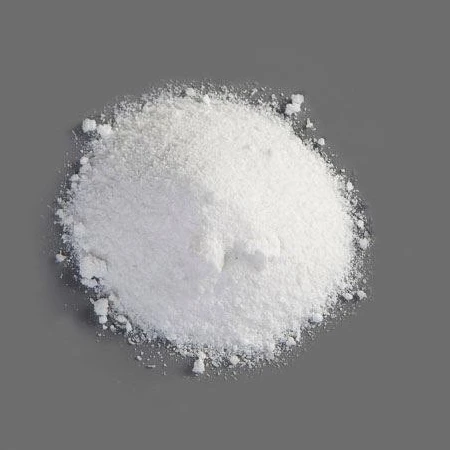
Boric acid is a white crystalline solid with a triclinic/hexagonal layered lattice, classified under industrial inorganic acids. When introduced into the glass batch, it undergoes successive endothermic dehydration reactions at relatively low temperatures, ultimately converting into boron trioxide (B2O3). This oxide ranks as one of the most effective glass network formers alongside silica (SiO2), establishing robust covalent linkages throughout the molten matrix.
Boron demonstrates an amphoteric structural role within the glass matrix, known as the boron anomaly. Depending on the batch stoichiometry and alkali ratio, boron can coordinate either as planar BO3 trigonal units or tetrahedral BO4 groups integrated alongside SiO4 tetrahedra. The formation of BO4 units eliminates non-bridging oxygens (NBOs), yielding a denser, highly interconnected structural network. These structural modifications significantly enhance transport and thermodynamic properties relative to conventional soda-lime formulations.
Furthermore, boric acid acts as an aggressive fluxing agent, substantially lowering the liquidus and refining temperatures of silica. This depression of the melting point not only protects furnace refractories from excessive thermal wear, but also lowers melt viscosity, promoting batch homogenization and accelerating the fining process by facilitating the rapid exsolution of trapped gas bubbles.
Applications of Boric Acid in Glassmaking and Borosilicate Production
One of the largest commercial sectors reliant on boric acid is the manufacture of chemically durable, thermal-shock-resistant borosilicate glasses. Using boric acid in this segment allows manufacturers to dramatically lower the linear coefficient of thermal expansion (CTE). Glasses characterized by low CTE values do not develop critical internal tensile stresses under abrupt temperature gradients, thereby exhibiting exceptional thermal shock resistance and mechanical integrity.
Borosilicate formulations derived from boric acid additions serve critical industrial domains:
- Laboratory and Biotechnology Glassware: Boiling flasks, beakers, and test tubes requiring near-complete chemical neutrality against concentrated acids and neutral aqueous solutions.
- Advanced Pharmaceutical Packaging: Type I hydrolytic class vials, carpules, and ampoules designed to prevent ion leaching and avoid chemical interactions with parenteral drugs.
- Domestic and Industrial Cookware: Thermal-shock-resistant bakeware engineered for rapid transition between freezer and high-temperature ovens.
- Optoelectronic Protective Covers: Chemically strengthened cover glasses, solar thermal collector tubes, and protective display substrates in microelectronics.
The high hydrolytic resistance of these glasses prevents the leaching of network-modifying cations into contacting solutions. In pharmaceutical glass production, stringent control over raw material purity—particularly minimizing trace transition metal contaminants in boric acid—is critical to meeting international pharmacopoeia standards (USP, Ph. Eur.).
Boric Acid in Melt Batch ──> Thermal Dehydration & Water Loss ──> B2O3 Formation ──> Silica Network Modification │ ┌───────────────────────────────────────────────────────────────────────────────────┘ ▼
- Reduced Coefficient of Thermal Expansion (Thermal Shock Resistance)
- Lower Melt Viscosity at Processing Temperatures
- Enhanced Chemical Durability against Acids and Neutral Media
- Suppression of Devitrification during High-Speed Forming
The Critical Role of Boric Acid in Fiberglass Manufacturing
The fiberglass industry represents one of the largest worldwide consumers of industrial-grade boric acid. Glass fibers are broadly divided into two major market segments: continuous filament reinforcement fibers for structural composites, and staple fibers for thermal and acoustic insulation (glass wool). In both sectors, the inclusion of boron trioxide is essential for meeting mechanical, rheological, and processing thresholds.
In E-glass formulations—the benchmark reinforcement fiber for automotive, aerospace, marine, and wind turbine blade composites—boric acid plays an indispensable dual role. These fibers require excellent dielectric performance and moisture resistance; therefore, alkali metal oxides (Na2O, K2O) must be kept strictly below 1.0 wt%. Glassmakers cannot use alkali-bearing borate minerals like standard borax. Instead, they rely on boric acid to introduce boron into the melt without loading unwanted alkali cations into the network.
During continuous filament drawing, molten glass exits platinum-rhodium alloy bushing tips at extremely high shear rates. Boric acid stabilizes the viscosity-temperature curve and surface tension of the melt at fiberizing temperatures, preventing filament breakage, fiber roping, and instability at the bushing meniscus. Additionally, boron trioxide drastically reduces the liquidus temperature and inhibits devitrification kinetics, preventing the crystallization of phases such as anorthite or cristobalite that induce fiber brittleness and yarn failure.
In insulation wool production, boric acid improves moisture resistance, elevates flame-retardant performance, and ensures the long-term elastic recovery (loft) of the fibrous matting under compressed shipping and storage conditions.
Comparative Analysis: Boric Acid vs. Alternative Boron Sources
Furnace operators and batch chemists can evaluate multiple boron sources, including borax pentahydrate, anhydrous borax, colemanite, and boric acid. However, specific metallurgical and quality constraints render boric acid irreplaceable in high-precision formulations.
Borax inputs significant sodium into the batch, making it unsuitable for E-glass or low-loss dielectric borosilicate substrates. Colemanite (calcium borate) is sodium-free, but it introduces high concentrations of calcium along with mineral contaminants such as clay, iron oxides, and arsenic. These impurities impair optical transmission and can destabilize melt chemistry in high-throughput furnaces.
Boric acid offers high chemical purity, rapid dissolution kinetics within the silicate melt, and zero unwanted companion oxides, making it the preferred raw material for precision technical glass, pharmaceutical tubing, and specialized continuous filaments. Its uniform chemical profile minimizes compositional striations, cord defects, and refractory wear patterns.
Interaction of Boric Acid with Fluxes and Refining Agents
Within the glass furnace, boric acid does not react in isolation; it functions within a complex multicomponent batch matrix of silica, alumina, refining chemicals, and oxidizing agents. For instance, combining boric acid with sodium nitrate in glass manufacturing provides complementary benefits: the nitrate acts as a high-temperature oxidizing agent and fining aid to eliminate carbonaceous seeds and sulfate cords, while boron lowers the primary liquid-phase formation temperature.
In specialty and chemically strengthened glass production, borosilicate articles undergo chemical tempering via molten salt baths containing potassium nitrate. During this ion-exchange process, smaller sodium ions residing in the borosilicate surface layer are replaced by larger potassium ions at temperatures below the glass transition point ($T_g$). This produces an engineered compressive stress layer, dramatically enhancing flexural strength, scratch resistance, and impact toughness.
Balancing boric acid additions with batch fluxes lowers initial eutectic temperatures, suppresses the surface tension of silica-rich melts, and enhances the solubility and clearance of dissolved refining gases—delivering an optically homogenous, seed-free final product.
Process Engineering Challenges and Mitigation in Boric Acid Use
Despite its distinct technological advantages, melting boric acid at typical industrial furnace temperatures (1450 °C to 1600 °C) introduces operational challenges that demand precise engineering controls. The primary operational concern is the volatility of boron species. At elevated temperatures, B2O3 reacts with ambient moisture within the combustion space, forming gaseous metaboric acid (HBO2) and orthoboric acid (H3BO3) that volatilize into the flue gas stream.
This surface volatilization causes economic loss through batch carryover and presents several process hazards:
- Refractory Superstructure Corrosion: Volatile boron compounds aggressively attack aluminosilicate, mullite, and fused-cast AZS (alumina-zirconia-silica) bricks in the furnace crown, ports, and regenerator checkerwork, causing accelerated chemical spalling.
- Melt Surface Inhomogeneity: The loss of volatile boron from the free melt surface alters local liquid composition, generating silica-rich surface cords, silica scum, and uncontrolled stress distribution in formed articles.
- Emissions and Off-Gas Loading: Boron carryover requires downstream wet scrubbers and electrostatic precipitators (ESPs) to comply with industrial air quality emission limits for particulates and hazardous air pollutants.
To mitigate these phenomena, modern glassmakers employ oxy-fuel fired furnaces, which significantly reduce exhaust gas volume and velocity, thereby suppressing surface shear and boron stripping. Further measures include utilizing granulating or pelletizing systems, introducing controlled batch wetting (typically 2–4% moisture) to suppress dusting, and optimizing grain-size distribution to accelerate batch dissolution before reaching the combustion zone.
Conclusion
The use of boric acid in glassmaking and fiberglass production remains an essential foundation of modern technical ceramics, enabling the high-volume manufacture of thermal-shock-resistant, mechanically durable, and chemically inert vitreous products. As an exceptional silica network modifier, boric acid gives engineers precise control over melt viscosity, crystallization kinetics, and glass expansion behavior.
With accelerating global demand for high-performance materials—from composite structural reinforcements in renewable energy to pharmaceutical glass containers and photovoltaic covers—securing high-purity, consistent-grade boric acid is an operational necessity. Precision batch formulation coupled with advanced thermal management of boron volatilization ensures compliance with the most rigorous international quality and engineering standards.