
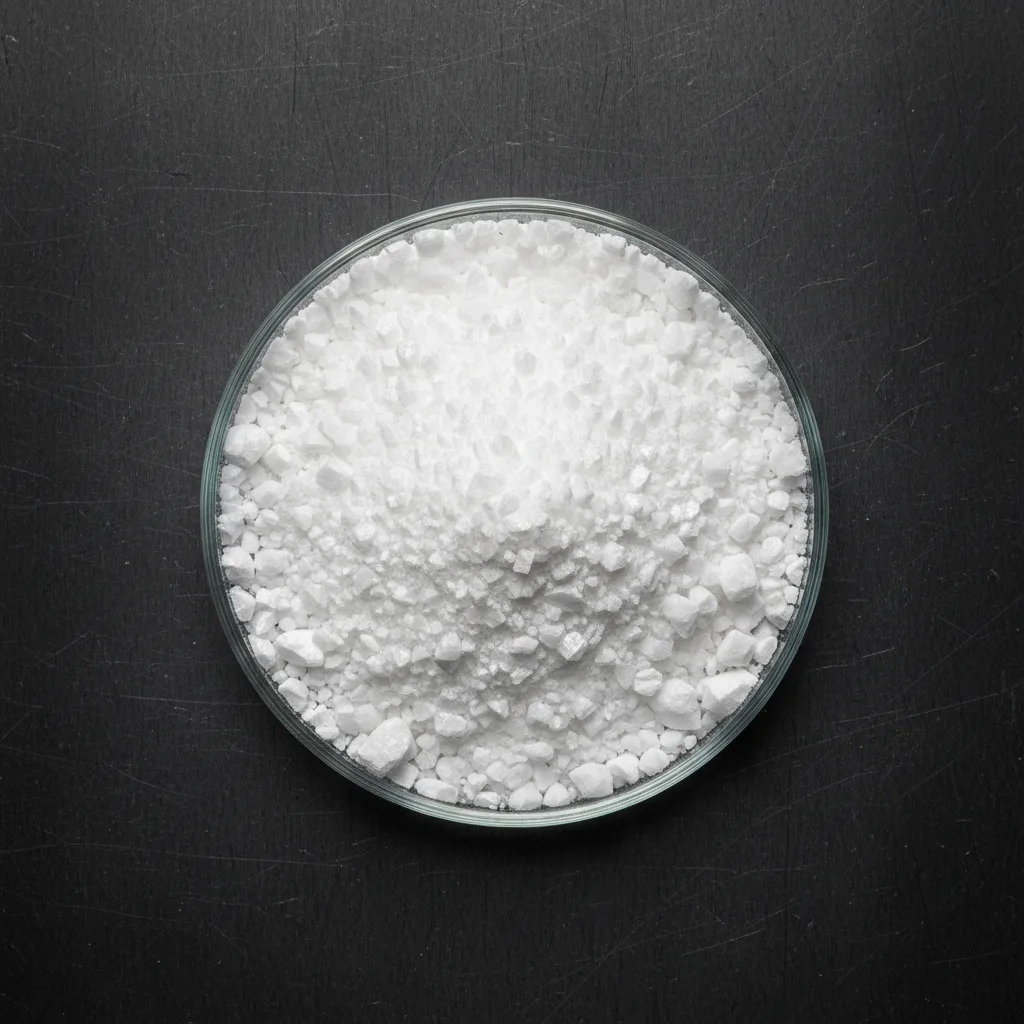
Nitrates
Supply and production of industrial and agricultural nitrates at Moltichem. Review technical specifications and compound selection guidelines.
Nitrate compounds constitute an essential class of inorganic salts composed of the nitrate anion. Due to their exceptional water solubility and strong oxidizing properties, they play a vital role across diverse industries. These materials serve as a primary source of bioavailable and chemical nitrogen in both industrial synthesis and biological processes. Manufacturing facilities and processing plants utilize these compounds for their oxidizing capacity, thermal stability, or nutrient characteristics, depending on the specific cation bound to the salt. A thorough understanding of the chemical behavior of each nitrate compound is essential for optimizing production processes and adhering to rigorous safety standards.
General Structure and Properties of Nitrates
Due to the high polarity of their nitrogen-oxygen bonds, nitrates exhibit remarkable water solubility, with dissolution typically occurring as an endothermic process. When exposed to elevated temperatures, these compounds decompose to liberate oxygen; consequently, they are classified as oxidizing agents and demand specialized storage and handling protocols. Physical properties—such as crystalline morphology, hygroscopicity, and melting point—vary significantly depending on the cation paired with the nitrate ion. For a more comprehensive evaluation of reactions and technical requirements for this group of materials, the technical articles in our educational section provide in-depth operational guidance.
Comparison of Widely Used Compounds in This Category
Selecting the appropriate raw material among various nitrate salts depends directly on the operational objectives of your production line:
- Potassium Nitrate: A compound characterized by white crystals and low hygroscopicity that concurrently delivers both potassium and nitrogen for agricultural formulations and industrial systems; to source this material, visit our potassium nitrate product page.
- Sodium Nitrate: Widely utilized as a cost-effective source of nitrate ions in metallurgical processing, glass manufacturing, and molten salt heat-transfer formulations.
- Calcium Nitrate: A rapidly dissolving salt predominantly used to reinforce plant cell walls in specialty agriculture and as an accelerator in concrete setting admixtures.
Industrial Applications and Selecting the Right Grade
The industrial application of nitrate salts spans heavy manufacturing through to precision laboratory synthesis. In metallurgy and metal finishing, these compounds facilitate controlled surface oxidation and regulate the freezing point of molten salt baths. In optical glass and enamel manufacturing, adding nitrate ions prevents discoloration and mitigates gas bubble formation within silicate melts. Furthermore, specialized fertilizer formulators require premium grades with strictly controlled chloride and heavy metal limits to prevent root toxicity and soil salinization.
The synthesis method directly dictates the final purity profile and chemical behavior of these salts. For instance, reviewing Methods of Producing Potassium Nitrate: Synthesis and Industrial Manufacturing Processes helps procurement specialists and technical teams audit incoming material quality. Evaluating the active assay percentage, free moisture content, and particle size distribution are critical parameters before finalizing bulk purchase orders. To compare various commercial grades and technical specifications for potassium-based formulations, the potassium nitrate category serves as a reliable reference for engineers and procurement managers.