
Fire safety and flame mitigation represent primary concerns across the construction, textile, petrochemical, and personal protective equipment industries. Among the broad range of chemical agents engineered to control flames and reduce ignition hazards, phosphate compounds occupy an indispensable position. The application of monoammonium phosphate in fire retardants and multi-purpose extinguishing agents is globally recognized and fundamental at the industrial scale. Due to its chemical stability, high efficiency, and multi-faceted suppression mechanism, it serves as the premier choice for safety engineers and flame-retardant formulators alike.
A precise understanding of its chemical architecture and operating mechanisms enables industries to develop end products with enhanced thermal resistance and compliance with stringent fire safety regulations. This article examines in detail the physicochemical properties, flame-retardant mechanisms, formulations, and industrial advantages of monoammonium phosphate across various fire protection sectors.
What Is Monoammonium Phosphate and What Is Its Structure?
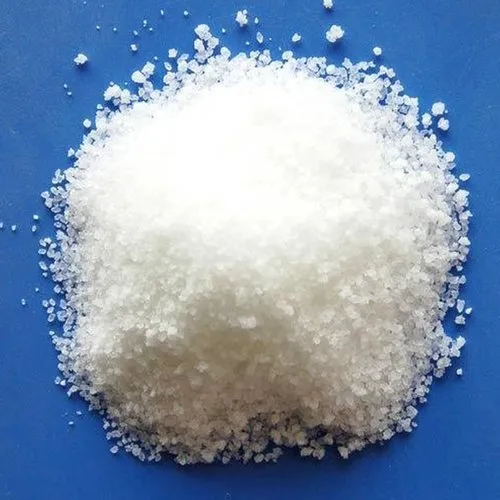
Monoammonium phosphate, commonly abbreviated as MAP, is one of the most widely utilized water-soluble inorganic salts. Synthesized via the reaction of phosphoric acid with anhydrous ammonia, its molecular formula is denoted as $NH_4H_2PO_4$. Commercially, it is supplied as white, odorless, free-flowing crystalline granules.
While a significant portion of global MAP production supplies the agricultural sector as a high-analysis fertilizer, technical and industrial grades are specifically refined for flame-retardant formulations. High chemical purity and minimal moisture content are critical in fire-safety grades. To prevent caking and compaction inside pressurized extinguisher cylinders, industrial MAP undergoes specialized particle conditioning and surface fluidization with silicone treatments to preserve long-term flowability.
Chemical and Physical Flame-Retardant Mechanisms of Monoammonium Phosphate
The flame suppression and fire-retardant efficacy of monoammonium phosphate stem from a multi-stage physicochemical mechanism operating simultaneously across the condensed and gas phases. When exposed to ignition temperatures, MAP initiates a sequence of endothermic reactions that disrupt the combustion chain.
Endothermic Decomposition and Localized Cooling
In the primary stage, monoammonium phosphate undergoes thermal decomposition. This process is intensely endothermic, extracting substantial amounts of thermal energy from the combustion zone. This active heat sink lowers the substrate temperature below its auto-ignition threshold, halting the thermal feedback loop required for flame propagation.
Release of Non-Flammable Gases
Thermal decomposition yields non-combustible ammonia gas ($NH_3$) and water vapor ($H_2O$). These gases dilute atmospheric oxygen and the volatile flammable pyrolysis products surrounding the flame front. By diminishing the partial pressure of oxygen in the reaction zone, flaming combustion is rapidly arrested.
Vitreous Char Formation
The defining technical advantage of MAP over competing agents is the condensation of residual phosphoric acid into polyphosphoric acid on the substrate surface. Under high heat, this acidic melt transitions into an impervious, viscous, glassy layer. This coherent barrier insulates the substrate, prevents direct contact with atmospheric oxygen, and limits radiative heat transfer into deeper unburnt material.
Application of Monoammonium Phosphate in Fire Extinguishers
A primary industrial application of MAP is its role as the active base in multi-purpose dry chemical fire extinguishers. Commonly designated as Class ABC extinguishers, these units effectively suppress three distinct categories of fire hazards. Monoammonium phosphate constitutes the core extinguishing constituent in these formulations.
Its inclusion offers specific performance advantages:
- Class A Fires (Combustible Solids): Forms a stable, glassy glaze over glowing embers in wood, paper, rubber, and fabrics, cutting off oxygen and preventing reignition.
- Class B Fires (Flammable Liquids): Scavenges free radicals within the flame envelope while cooling the fuel surface to suppress vapor propagation.
- Class C Fires (Electrical Equipment): Acts as a safe extinguishing agent because dry, unreacted monoammonium phosphate is non-conductive, protecting operators from electric shock during discharge on energized circuits.
To maximize discharge velocity and storage stability, MAP is blended with functional additives such as ammonium sulfate, diatomaceous earth, and silicone oils. These hydrophobic coatings ensure consistent powder fluidity during rapid nozzle discharge and prevent hygroscopic caking in humid environments.
Use of Monoammonium Phosphate in Textile and Wood Industries
Beyond portable extinguishing systems, the application of monoammonium phosphate in fire retardants extends to durable surface treatments and impregnating agents. Lignocellulosic materials and natural fibers exhibit high combustibility, demanding flame-retardant processing in structural timber and interior decor.
In wood and engineered lumber impregnation, dilute aqueous MAP solutions are infused into the cellular matrix under vacuum-pressure processes. The salt penetrates the lignin and cellulose architecture, retarding flaming combustion upon fire exposure. This treatment slows flame spread across interior surfaces and significantly extends structural integrity and evacuation windows.
Within technical textiles, contract furnishings, theater draperies, and protective apparel are treated with aqueous MAP finishing emulsions. Following solvent evaporation, microcrystalline deposits bond to the fibers, lowering flame spread rates and reducing smoke evolution.
The Role of Phosphate Compounds in Intumescent Coatings
Intumescent fire-retardant coatings represent an advanced passive fire protection methodology for modern architectural structures. Applied to structural steel frameworks, these paints and varnishes prevent structural deformation and load-bearing collapse under extreme fire exposure.
In intumescent formulations, monoammonium phosphate functions as the acid catalyst or acid donor. The chemical pathway proceeds as follows:
- As temperatures rise, MAP decomposes to release mineral phosphoric acid.
- The liberated acid catalyzes esterification reactions with a carbonific source, such as pentaerythritol.
- A blowing agent, typically melamine, decomposes to release inert gases, foaming the molten carbonaceous matrix.
- The expanded mass solidifies into a thick, porous, multicellular char with exceptional thermal insulation properties.
This insulative barrier shields the steel substrate from reaching its critical failure temperature for extended durations. Formulators combine specialized inorganic chemicals and carbon-rich donors to maximize the thermal insulation coefficient of the resulting protective barrier.
Environmental and Technical Advantages over Other Flame Retardants
Increasing regulatory restrictions on halogenated flame retardants based on chlorine and bromine—driven by concerns over persistent bioaccumulation and toxic dioxin emissions—have shifted industrial demand toward eco-compatible phosphorus alternatives.
Monoammonium phosphate contains neither halogens nor toxic heavy metals. Its thermal breakdown does not generate acute toxicants such as halogen halides, making it far safer for deployment in public buildings, transport hubs, and food manufacturing facilities. Furthermore, it possesses zero ozone depletion potential (ODP) and poses low ecotoxicological hazards when managed appropriately.
Moreover, MAP exhibits broad compatibility with diverse organic chemicals and binder systems, integrating into coatings and plastics without severely compromising mechanical attributes such as tensile strength or flexibility.
Key Considerations for Storage and Industrial Handling
Given its salt characteristics and mild hygroscopicity, industrial monoammonium phosphate requires standardized handling and warehousing procedures:
- Materials should be stored in cool, dry, well-ventilated indoor facilities protected from direct precipitation.
- Bags must be maintained off wet ground using heavy-duty wooden or plastic pallets.
- Given the chemical reactivity of ammonium salts in alkaline conditions, MAP must never be stored adjacent to bases and alkalis; contact releases hazardous ammonia gas and deactivates the compound's fire-retardant performance.
- Operators in blending and manufacturing environments must wear appropriate personal protective equipment, including particulate respirators and protective gloves.
Because dry MAP powder can become mildly corrosive to ferrous and non-ferrous alloys in the presence of ambient humidity, thorough post-incident cleaning and residue removal from metal substrates and electrical assemblies are essential.
Conclusion
Monoammonium phosphate remains the foundational benchmark for modern dry chemical extinguishing systems and thermal barrier technologies. By integrating three critical suppression mechanisms—endothermic cooling, combustible gas dilution, and dense vitreous char shielding—this inorganic salt provides reliable fire defense across diverse sectors. Industrial compounders utilizing technical MAP in intumescent paints, cellulosic treatments, and portable extinguishers achieve compliance with rigorous international life-safety standards.