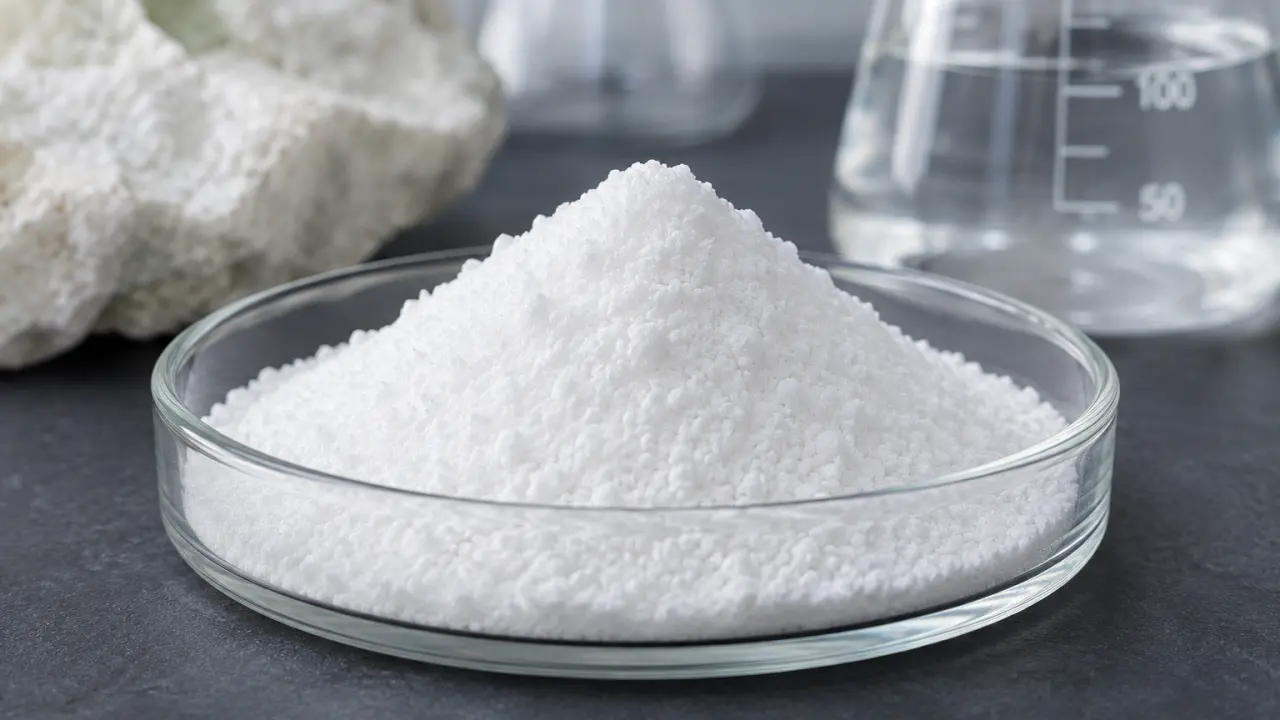

Extracting precious metals from natural ores is among the most intricate and critical fields in extractive metallurgy. Among hydrometallurgical techniques, the use of sodium cyanide in gold and silver extraction stands as the global industrial standard and the most economically viable processing route. Due to its superior ability to form stable complexes with gold and silver, this chemical compound—represented by the formula NaCN—has made the commercial exploitation of low-grade deposits technically and financially feasible.
A comprehensive understanding of cyanidation chemistry, operational variables, and industrial safety management is essential for mineral processing engineers and plant metallurgists. This article provides an in-depth examination of the underlying chemical mechanisms, commercial leaching methods, metal recovery technologies, and environmental detoxification protocols.
Chemistry of the Gold and Silver Cyanidation Process
The dissolution of gold and silver in an aqueous cyanide solution is an electrochemical oxidation-reduction reaction. Under standard conditions, gold is a noble, highly unreactive metal. However, in the presence of cyanide ions and an oxidizing agent—typically dissolved oxygen—it oxidizes and dissolves as a stable coordination complex. This fundamental reaction was first formulated by Elsner and serves as the scientific foundation of modern gold hydrometallurgy.
According to Elsner's equation, gold reacts with cyanide ions and oxygen molecules in an aqueous medium. This process yields the dicyanoaurate complex anion, which is completely soluble in water. A parallel reaction occurs with silver, producing the dicyanoargentate complex. In both systems, electron transfer takes place at the solid-liquid interface.
The reaction kinetics depend heavily on the concentrations of both dissolved oxygen and free cyanide in the aqueous phase. If sodium cyanide concentration is elevated without adequate dissolved oxygen, the dissolution rate plateaus, resulting in chemical wastage. Conversely, a deficiency of cyanide—even under intensive aeration—sharply limits the leaching rate of precious metal particles.
Importance of pH Control and the Role of Alkalis
A critical operational requirement when applying sodium cyanide in gold and silver extraction is maintaining a strictly alkaline slurry environment. In acidic or neutral conditions, cyanide ions readily accept hydrogen ions to form hydrogen cyanide, an extremely volatile and lethal gas. To prevent this hazardous volatilization and eliminate reagent loss, operators utilize bases and alkalis to buffer and stabilize the slurry pH.
Calcium hydroxide (hydrated lime) or sodium hydroxide is routinely added to maintain protective alkalinity, typically above pH 10.5. Keeping the slurry alkaline shifts the chemical equilibrium toward preserving free cyanide ions. Failing to maintain this threshold exposes personnel to severe inhalation risks, results in fugitive reagent losses to the atmosphere, and stalls the leaching process.
Furthermore, the presence of soluble base-metal cations such as copper, zinc, and iron in the ore can cause significant, parasitic cyanide consumption. Rigorous pH monitoring and effective alkalinity management help suppress unwanted side reactions and intermediate complex formation with these base metals. Selecting appropriate reagents from the inorganic chemicals category is essential for optimizing overall leaching economics.
Industrial Leaching Methods Using Sodium Cyanide
Depending on ore mineralogy, precious metal grades, and capital constraints, mining operations deploy different engineering approaches for cyanide leaching. The two primary industrial methods are heap leaching and agitated tank leaching, each offering distinct operational profiles.
Heap Leaching
Heap leaching is predominantly employed for low-grade, high-tonnage gold and silver deposits. In this process, run-of-mine or crushed ore is stacked onto engineered, impermeable geomembrane liners to form large heaps. A dilute sodium cyanide solution is then distributed uniformly over the top surface via drip emitters or wobbler sprinklers.
As the alkaline cyanide lixiviant percolates downward through the ore bed, it selectively dissolves gold and silver particles and emerges at the base as a pregnant leach solution (PLS). Heap leaching requires significantly lower initial capital expenditure than milling circuits, but leaching kinetics are slow—often requiring weeks or months to reach target recoveries. Additionally, maintaining uniform solution distribution and preventing channeling within the heap remain notable operational challenges.
Agitated Tank Leaching
For medium-to-high-grade ores or those requiring fine grinding to liberate encapsulated values, mechanically agitated tanks are the standard solution. Milled ore is mixed with water and an alkaline sodium cyanide solution to form a homogenous slurry. Continuous injection of compressed air or pure oxygen into the tanks maximizes oxidation rates.
Dissolution residence times in agitated leach circuits typically range between 12 and 48 hours, which is substantially faster than heap leaching. This method delivers significantly higher metal recoveries and allows precise, automated control over cyanide concentration, dissolved oxygen levels, and pH. However, it incurs higher capital equipment costs and electrical power consumption.
Recovery Processes from Pregnant Cyanide Solutions
Once gold and silver are dissolved in the cyanide solution, the pregnant aqueous phase must be separated or treated to recover the precious metals in metallic form. Several downstream processing technologies exist, with zinc dust precipitation and activated carbon adsorption being the most prominent.
The Merrill-Crowe Process (Zinc Precipitation)
The Merrill-Crowe process is an established, highly reliable technology for recovering precious metals, especially from solutions with elevated silver-to-gold ratios. The process involves four sequential stages:
- Clarification of the pregnant leach solution through pressure filters to remove suspended silica and clay fines
- Deaeration in vacuum towers to strip dissolved oxygen from the solution
- Addition of atomized zinc dust, often catalyzed by soluble lead salts (such as lead nitrate), to drive the reductive cementation reaction
- Collection of the resulting metallic precipitate using recessed-plate filter presses
The metallic zinc oxidizes, donating electrons to reduce the gold and silver cyanide complexes back into insoluble elemental metals. The collected filter cake is washed with mineral solutions—such as products from the inorganic acids group—to dissolve excess unreacted zinc, and is then smelted in an induction furnace to produce doré bullion.
Activated Carbon Adsorption Processes (CIP, CIL, CIC)
Activated carbon adsorption is the predominant technology used in contemporary gold recovery. In the Carbon-in-Pulp (CIP) configuration, the ore slurry is completely leached in upstream tanks before passing through a series of agitated contactors containing coarse granular activated carbon. The porous internal surface of the carbon selectively adsorbs the gold-cyanide complex.
In the Carbon-in-Leach (CIL) circuit, cyanide leaching and carbon adsorption occur concurrently within the same tanks. CIL is particularly advantageous for processing preg-robbing ores containing natural organic carbon, as the activated carbon rapidly outcompetes indigenous carbonaceous matter for dissolved gold complexes. Once fully loaded, the carbon is transferred to an elution column where gold is stripped under elevated temperature and pressure using a caustic-cyanide solution, followed by electrowinning onto steel-wool cathodes.
Challenges with Refractory Ores
Certain geological deposits do not respond favorably to conventional direct cyanidation. Ores where micro-fine gold particles are locked inside sulfide mineral matrices (such as pyrite, marcasite, and arsenopyrite) are classified as refractory. In these ores, physical passivation prevents the cyanide lixiviant from contacting the precious metal.
Processing refractory ores requires an oxidative pretreatment—such as roasting, pressure oxidation (autoclaving), or bio-oxidation—to decompose the sulfide host matrix prior to cyanidation. In select hydrometallurgical and oxidative stages, oxygen-donating compounds from the nitrates family and specialized oxidants are used to modify crystalline structures and liberate occluded values. Without destroying the sulfide lattice, cyanide consumption escalates excessively, and recovery rates remain uneconomically low.
Similarly, reactive copper minerals present in the feed dramatically increase cyanide consumption through the formation of copper-cyanide complexes. In such operations, reagent dosages must be rigorously modeled and controlled to manage competitive ion uptake and preserve process economics.
Industrial Safety and Cyanide Tailings Detoxification
Handling sodium cyanide requires strict adherence to international industrial safety standards. Due to the high toxicity associated with skin absorption, ingestion, and especially hydrogen cyanide gas inhalation, plant facilities mandate comprehensive personal protective equipment (PPE), continuous ambient gas monitoring systems, and readily accessible cyanide antidote kits.
From an environmental standpoint, discharging untreated cyanide-bearing tailings into the ecosystem is strictly regulated and hazardous. Modern mining operations integrate dedicated effluent treatment plants to destroy residual cyanide compounds before tailings deposition. Standard industrial detoxification methods include:
- The SO2/air process (INCO process) to catalytically oxidize free and WAD (weak acid dissociable) cyanide to cyanate
- Alkaline chlorination utilizing sodium hypochlorite or chlorine gas in an alkaline medium
- Hydrogen peroxide oxidation to convert hazardous cyanide species into safer intermediate forms
- Precipitation and stabilization using ferrous iron salts to form insoluble, non-toxic ferrocyanide complexes
The cyanate produced by these advanced oxidation processes progressively hydrolyzes in the environment into benign ammonium and carbonate ions, exhibiting negligible ecotoxicity compared to free cyanide. Implementing effective detoxification processes ensures regulatory compliance, protects local watersheds, and supports sustainable industrial mining practices.
Conclusion
The use of sodium cyanide in gold and silver extraction remains the premier hydrometallurgical method for the commercial recovery of precious metals worldwide. Its unmatched dissolution efficiency, economic viability across diverse ore grades, and seamless integration with downstream carbon-adsorption and precipitation circuits keep it at the forefront of the extractive industry. Although sodium cyanide is intrinsically hazardous, precise monitoring of pH and dissolved oxygen, combined with proven tailings destruction technologies, enables processing plants to operate safely, economically, and in full environmental compliance.