Balanced nutrient management is a fundamental pillar of modern crop production and maximizing yield per hectare. As an essential primary macronutrient, phosphorus plays a direct role in cellular energy transfer, nucleic acid synthesis, and the structural integrity of plant cell membranes. Among various phosphorus sources, diammonium phosphate (DAP) remains one of the most prevalent and cost-effective compounds utilized worldwide. Understanding the technical applications of diammonium phosphate in agriculture enables agronomists, procurement specialists, and growers to adopt precise fertilization strategies that enhance nutrient uptake efficiency while mitigating phosphorus fixation in the soil.
Chemical Nature and Properties of Diammonium Phosphate
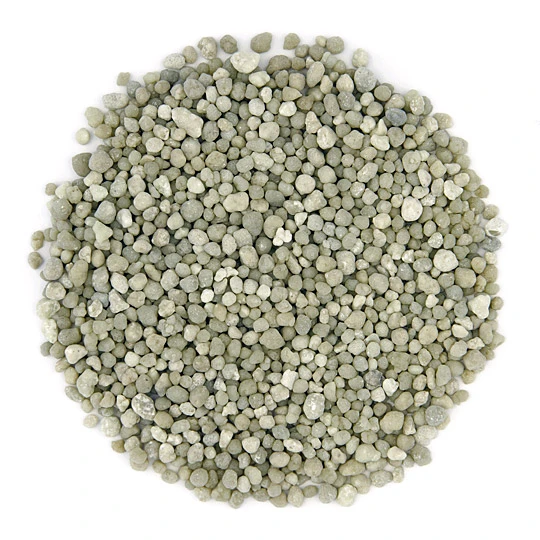
Diammonium phosphate is an inorganic crystalline salt manufactured by reacting anhydrous ammonia with phosphoric acid. It is commercially supplied as uniform, stable spherical granules characterized by high water solubility. The co-formulation of orthophosphate and ammonium nitrogen within the same crystal matrix provides distinctive agronomic uptake characteristics.
The ammonium cation paired with phosphate anions enhances phosphorus uptake efficiency through physiological root synergy. However, the initial dissolution of diammonium phosphate in soil water generates an alkaline microenvironment. This distinctive reaction pathway across various soil chemistries dictates the optimal placement and application methods for this input.
The Role of Diammonium Phosphate in Early Growth and Rooting
Root system development during early vegetative stages governs a crop's capacity to access moisture and nutrients throughout the entire growing season. Phosphorus is highly mobile within plant tissues yet exceptionally immobile within the soil matrix. Seedlings have limited, localized root systems that demand readily available orthophosphate pools adjacent to developing root hairs.
One of the vital agricultural applications of diammonium phosphate is promoting early root initiation and rapid seedling establishment. Phosphorus supplies the metabolic energy needed for active cell division in root meristems in the form of adenosine triphosphate (ATP). Concurrently, the ammonium fraction supports immediate amino acid and protein synthesis, preventing early-season vegetative arrest. In heavier soil textures or specific climatic conditions, alternative sources such as monoammonium phosphate are frequently evaluated to leverage their acidic localized reaction profile.
Behavior of Diammonium Phosphate Across Different Soils
When a diammonium phosphate granule dissolves in moist soil, it undergoes a characteristic reaction. Hydrolysis generates a temporary alkaline microsite directly adjacent to the particle. In acidic soils, this transient pH increase is agronomically advantageous, as it suppresses immediate phosphorus fixation by active iron and aluminum cations.
Conversely, in calcareous soils with intrinsically high background pH, this temporary alkaline reaction can trigger the volatilization of free ammonia gas (NH₃). Understanding soil mechanics and adopting deep placement techniques is therefore essential to curb nitrogen losses. Maintaining an appropriate balance of nitrogen forms is equally critical; in intensive base-dressing programs, dedicated nitrogen sources such as urea are integrated alongside phosphate carriers to meet overall crop demand without over-applying phosphorus.
Nutrient Interactions in the Root Zone
- Enhanced localized orthophosphate availability driven by companion ammonium cations
- Physiological synergy between ammonium uptake and root-zone orthophosphate transport
- Risk of insoluble calcium phosphate precipitation under high levels of active soil calcium
- Necessity of balanced cation-anion ratios to avoid competitive uptake suppression
Application Methods and Optimal Timing for Diammonium Phosphate
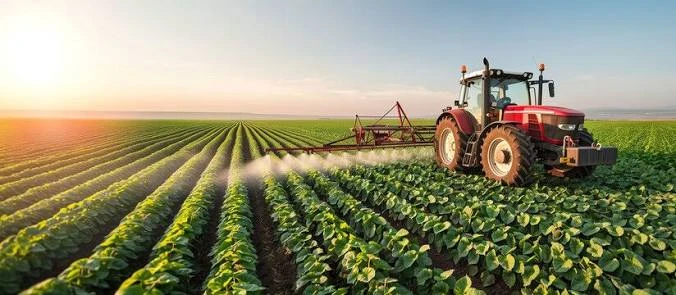
Due to the minimal diffusion distance of phosphate ions in the soil profile, the application method for diammonium phosphate requires precise execution. Broadcast application without deep mechanical incorporation leaves phosphorus stranded in dry surface layers where root activity and moisture availability are suboptimal.
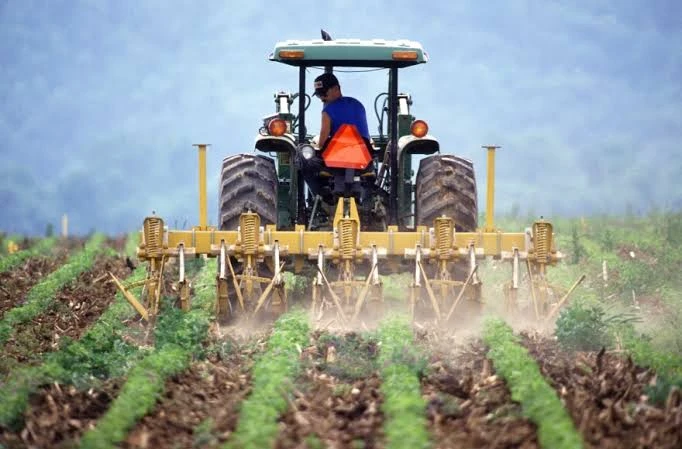
Subsurface band placement adjacent to and below the seed furrow at planting represents the most efficient practice. Banding minimizes fertilizer-to-soil contact area, drastically lowering phosphorus fixation rates. Furthermore, it positions nutrients directly in the path of expanding primary roots. Proper separation distance between the seed line and the fertilizer band must be maintained to prevent free ammonia toxicity from compromising seedling viability.
Practical Comparison of Diammonium Phosphate with Other Phosphorus Sources
Selecting an appropriate phosphorus carrier requires a detailed evaluation of soil chemistry, crop sensitivity, and irrigation management. While diammonium phosphate commands the largest share of the global dry bulk fertilizer market, modern agronomy increasingly utilizes complementary and alternative phosphate sources.
In alkaline and high-bicarbonate soils, acidifying the rhizosphere becomes an operational priority; under these conditions, evaluating the applications of monoammonium phosphate in modern agriculture and horticulture highlights how an acidic initial reaction can benefit nutrient uptake. Nevertheless, owing to its high nutrient analysis, diammonium phosphate remains the standard, cost-effective choice for broadacre field crops, including cereals, oilseeds, and grain corn.
Complementing Diammonium Phosphate with Secondary Macronutrient Fertilizers
Plant nutrition programs must extend beyond nitrogen and phosphorus alone. Cell wall rigidity, abiotic stress tolerance, and marketable crop quality depend heavily on essential cations such as potassium and calcium. Once crops establish strong root foundations via diammonium phosphate, their systemic demand for potassium escalates rapidly to support carbohydrate translocation and stomatal regulation.
Employing soluble potassium sources such as potassium nitrate during reproductive and bulking stages complements the fertility foundation laid down by DAP. A broader overview of this cation's metabolic role is detailed in our comprehensive review of potassium nitrate applications in agriculture and plant nutrition. Likewise, for crops vulnerable to localized calcium deficiencies during fruit set, incorporating targeted inputs like calcium nitrate prevents physiological disorders and post-harvest cell breakdown.
Safety Considerations, Storage, and Environmental Impact
Preserving the physical integrity of diammonium phosphate granules during warehousing demands rigorous control of storage temperature and relative humidity. The compound exhibits hygroscopic tendencies in high-humidity environments, leading to caking and moisture absorption that can impede the calibration and operation of pneumatic seeders and precision fertilizer applicators.
From an environmental stewardship standpoint, precise application rates and placement are mandatory. While vertical leaching of phosphorus is minimal across most soil textures, surface runoff can carry sediment-bound particulate phosphorus directly into surface water bodies, driving eutrophication. Adopting conservation tillage and subsurface banding optimizes financial returns on fertilizer inputs while safeguarding regional soil and water resources.
Conclusion
With its high concentration of plant-available nitrogen and phosphorus, diammonium phosphate serves as a vital component of global soil fertility and crop nutrition programs. Successfully managing the agricultural applications of diammonium phosphate requires an understanding of its dissolution dynamics, its localized influence on microsite pH, and the sensitivity of germinating seeds to free ammonia. Precision subsurface banding alongside balanced secondary and micronutrient applications remains an established pathway to maximizing economic returns, nutrient use efficiency, and crop yield quality.
Matin Badi writes the technical articles on the Moltichem blog, covering the industrial and agricultural uses of chemicals, their properties, and their safe storage and handling.
Author page