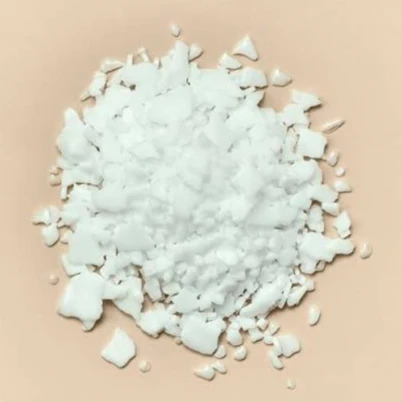
The applications of potassium hydroxide in agriculture leverage its strong alkalinity and high concentration of potassium ions (K⁺) for synthesizing high-solubility liquid fertilizers, extracting humic acid, neutralizing acidic soils, and producing insecticidal potassium soaps. These applications enhance plant nutrient availability while enabling non-chemical crop protection across open-field and greenhouse operations.
Chemically represented by the molecular formula KOH and commercially known as caustic potash, this compound serves as an essential precursor throughout the agricultural inputs industry. Moltichem, a dedicated supplier of potassium hydroxide to industrial manufacturing facilities and fertilizer formulators, outlines below the technical specifications, mechanisms of action, and specialized industrial uses of this material.
The Importance of Potassium in Plant Physiology
Potassium is a primary macronutrient essential for both the vegetative and reproductive development of crops. The K⁺ ion plays a fundamental role in regulating cellular osmotic potential, driving stomatal opening and closure, facilitating protein synthesis, and activating more than 60 plant enzymes. Adequate potassium uptake also substantially improves plant tolerance against abiotic and biotic stresses, including drought, frost, and pest pressure.
Unlike conventional potassium sources such as potassium chloride, which presents operational limitations in saline soils or on chloride-sensitive crops, potassium hydroxide leaves behind no chloride radicals. Consequently, compounds synthesized using caustic potash as a base are well-suited for high-density cropping systems and soils prone to salinity stress.
Synthesis of Liquid Fertilizers Using Potassium Hydroxide
A major industrial use of potassium hydroxide in agriculture is acid neutralization within manufacturing lines producing clear, fully soluble liquid fertilizers. Because KOH exhibits exceptional water solubility, its reaction with concentrated mineral and organic acids yields dissolved salts that minimize precipitation and prevent clogging in drip-irrigation emitters and fertigation systems.
- Potassium Phosphate Production: Reacting potassium hydroxide with phosphoric acid produces monopotassium phosphate (MKP) and dipotassium phosphate (DKP), standard ingredients in root-starter solutions and mid-to-late season fruiting fertilizers: H₃PO₄ + KOH → KH₂PO₄ + H₂O
- Liquid Potassium Nitrate Production: Reacting KOH with nitric acid generates a solution concentrated in plant-available nitrate-nitrogen and potassium, tailored for rapid uptake during active vegetative stages.
- Liquid Potassium Sulfate Production: Neutralizing sulfuric acid with potassium hydroxide provides a chloride-free source of soluble sulfur and potassium, supplementing traditional granular or powder potassium sulfate.
Due to their chemical purity and high leaf-absorption efficiency, the clear solutions derived from these processes are used extensively in commercial hydroponics and foliar nutritional sprays.
Extraction of Humic Acids and Potassium Humate Production
Humic and fulvic acids constitute a key fraction of soil organic matter, contributing to improved physical aggregation, enhanced aeration, and increased cation exchange capacity (CEC). These humic substances occur naturally in carbonaceous mineral deposits such as leonardite, but they remain insoluble in their raw form under acidic or neutral conditions.
Fertilizer manufacturers utilize potassium hydroxide as a strong alkaline digesting agent to break down and extract humic fractions from milled leonardite. During this alkaline extraction, the carboxyl and phenolic functional groups present on the humic acid molecules react with potassium cations, generating fully soluble potassium humate salts:
- Milling raw leonardite ore to micron-scale particle sizes
- Introducing dilute potassium hydroxide solutions inside agitated reaction vessels
- Separating insoluble humin fractions via industrial filtration or centrifugation
- Spray-drying the clarified liquid extract to yield commercial potassium humate powder or flakes
Using KOH rather than caustic soda in this extraction is a vital technical choice; sodium hydroxide introduces sodium cations that cause soil deflocculation and structural degradation, whereas potassium hydroxide enriches the finished soil amendment with plant-essential potassium.
Adjusting Acidic Soil pH and Conditioning Growing Media
Severe soil acidity (pH values below 5.5), common in high-rainfall agricultural regions, elevates the solubility of toxic aluminum and manganese ions while severely depressing plant uptake of phosphorus, calcium, and magnesium. Agricultural liming remains the traditional soil amendment practice, yet calcium carbonate compounds react very slowly through the soil profile.
Potassium hydroxide provides rapid, localized remediation of substrate acidity in commercial fields and controlled-environment growing media. Hydroxide ions (OH⁻) dissociate rapidly to neutralize active free hydronium ions (H⁺) in the soil solution, converting them directly into water: H⁺ + OH⁻ → H₂O
As the soil pH shifts upward toward the agronomic optimum (6.0 to 6.8), the displaced potassium cations occupy exchange sites on clay platelets and soil humus, immediately improving crop nutrition. Due to the high alkalinity of KOH, direct field application demands strict pH monitoring, precise dilution ratios, and calibrated irrigation flow rates to prevent chemical damage to the active root rhizosphere.
Production of Insecticidal Potassium Soaps and Pest Control
Modern integrated pest management (IPM) protocols prioritize lowering reliance on synthetic organophosphate and pyrethroid insecticides. Potassium hydroxide serves as the saponifying agent in reactions with plant-derived triglycerides and fatty acids (such as coconut, soybean, or olive oils) to yield soft agricultural potassium soaps: Triglyceride + 3KOH → Glycerol + 3 Fatty Acid Potassium Salts
These agricultural liquid soaps deliver several operational benefits over sodium-based soaps:
- Potassium carboxylate salts maintain superior solubility in cold spray water, preventing clogged nozzles and strainers.
- They dissolve the protective waxy epicuticular layer of soft-bodied sucking insects—such as aphids, thrips, scale crawlers, and spider mites—causing rapid dehydration and mechanical mortality.
- They leave no persistent toxic environmental residues and pose minimal hazard to beneficial pollinators like honeybees once dry.
- Upon foliar degradation, they release trace amounts of plant-absorbable potassium directly into leaf tissues.
For comprehensive technical insights on the comparative alkaline behavior of basic hydroxide compounds and an operational evaluation against caustic soda flakes, reviewing accompanying cation dynamics remains essential.
Safety Requirements and Storage of Potassium Hydroxide
Potassium hydroxide is officially classified as a strongly corrosive chemical (Corrosive, Class 8). Direct contact of solid flakes, pellets, or concentrated solutions with biological tissue induces deep chemical burns, and accidental ocular exposure carries high risks of irreversible vision impairment.
The dissolution of potassium hydroxide in water is intensely exothermic. When mixing concentrated master batches in fertilizer compounding facilities, solid KOH must always be added slowly and gradually to the calculated volume of water with continuous agitation—never pour water onto solid potash. Industrial handling personnel must be fitted with suitable personal protective equipment (PPE), including chemical-resistant gloves (nitrile or neoprene), full-face shields, and alkali-resistant protective suits.
Potassium hydroxide bags and intermediate bulk containers must be stored inside dry, cool, well-ventilated warehouse zones. The compound is aggressively hygroscopic and absorbs both moisture and ambient carbon dioxide rapidly, leading to caking and carbonation: 2KOH + CO₂ → K₂CO₃ + H₂O
Comparative Performance of Market Potassium Sources
Selecting an appropriate potassium source within a commercial crop nutrition program depends on soil salinity, baseline chemistry, crop sensitivity, and delivery equipment. The following comparison highlights key operational characteristics among common potassium inputs:
- Potassium Hydroxide: Strong alkaline reactant, immediate neutralization capacity, free of chlorine and sulfate; primarily utilized as an upstream manufacturing raw material, liquid fertilizer precursor, and humate extracting agent.
- Potassium Nitrate: Neutral inorganic salt supplying nitrate-nitrogen and potassium simultaneously; well-suited for fruit enlargement stages and open-field foliar feeding. Moltichem produces this salt at its specialized manufacturing facility located in Shokouhieh Industrial Town, Qom.
- Potassium Chloride: High salt index potassium salt; utilized for salt-tolerant broadacre field crops and correcting generalized soil potassium deficits where soil electrical conductivity permits.
- Potassium Sulfate: Low salt index salt carrying plant-available sulfur; utilized widely across calcareous soils and for chloride-sensitive horticultural crops.
These technical distinctions confirm that potassium hydroxide functions less as a single-element direct-spread field fertilizer and more as an foundational chemical building block for formulating advanced agricultural inputs.
Summary and Sourcing Inquiries
Industrial applications of potassium hydroxide in agriculture encompass synthesizing fully soluble crystal and liquid fertilizers, performing alkaline extractions of humic soil conditioners, neutralizing localized substrate acidity, and manufacturing bio-compatible insecticidal soaps. A precise command of this corrosive chemical’s thermodynamic and basic properties ensures operational safety while meeting tight technical specifications across agricultural supply chains.
Backed by extensive experience in commercial chemical distribution and mineral salt synthesis, Moltichem supplies high-grade caustic potash with certified certificates of analysis (CoA) for fertilizer, pesticide, and agricultural input manufacturing units. Industrial procurement managers, chemical engineers, and facility formulators are invited to contact our commercial sales division to review technical data sheets or request a quote.
Matin Badi writes the technical articles on the Moltichem blog, covering the industrial and agricultural uses of chemicals, their properties, and their safe storage and handling.
Author page