
Balanced and engineered soil nutrition forms the bedrock of high yields and premium quality in modern agriculture and advanced horticulture. Within this framework, phosphate fertilizers play an irreplaceable role in energy transfer, photosynthesis, and the expansion of meristematic tissues. Monoammonium phosphate uses in agriculture, as one of the most efficient sources of phosphorus and nitrogen, have earned the focus of plant nutritionists, greenhouse operators, and progressive growers worldwide. With its outstanding water solubility and moderately acidic reaction, this chemical compound optimizes nutrient uptake even in challenging growing media.
Achieving peak yield while managing fertilizer inputs efficiently requires an exact understanding of its chemical behavior, formulation, and dynamics in soil and nutrient solutions. Reviewing its technical specifications and field practices offers practical guidance for enhancing soil health and maximizing farm profitability.
What Is Monoammonium Phosphate and What Is Its Chemical Structure?
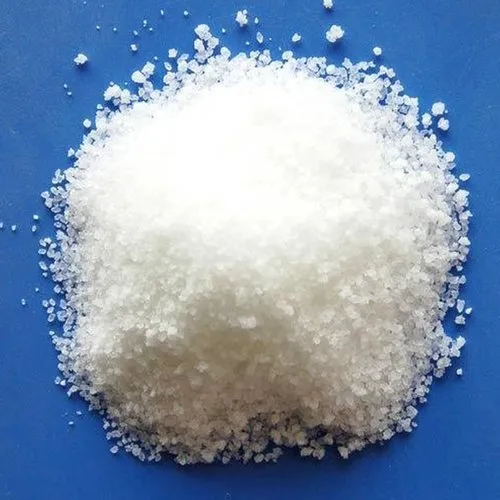
Monoammonium phosphate, commonly abbreviated internationally as MAP, is an inorganic chemical compound produced by neutralizing ammonia with phosphoric acid. It belongs to the category of mineral salts and typically presents as clear or white crystals with a stable, free-flowing granular structure. Its two primary constituents are nitrogen in the ammonium form and phosphorus as water-soluble orthophosphate, both vital for plant metabolic pathways.
The chemical stability of this salt, along with its freedom from chloride and sodium contaminants, makes it an ideal fit for sensitive root zones, saline soils, and closed-loop hydroponic systems. Its well-balanced molecular weight and crystalline bonds resist atmospheric caking under standard warehousing conditions. Within the broader spectrum of industrial inorganic chemicals, monoammonium phosphate remains one of the most widely consumed nutrient building blocks in commercial crop production.
The Synergistic Role of Nitrogen and Phosphorus
A key factor behind the agronomic efficiency of MAP is the synergistic interaction between the ammonium cation and the phosphate anion. The presence of ammonium nitrogen actively stimulates phosphorus uptake across plant root membranes. Because crops expend less metabolic energy assimilating ammonium than other nitrogen forms, roots excrete hydrogen ions ($H^+$) to maintain electrochemical equilibrium, thereby acidifying the rhizosphere. This biochemical process significantly enhances orthophosphate solubility and accelerates the uptake of both primary nutrients simultaneously.
Importance of Monoammonium Phosphate Uses in Agriculture for Root Development
The most crucial stage in any crop's life cycle is early stand establishment and the formation of a dense, vigorous root network. Without a well-developed root architecture, a plant's ability to forage for water and mineral nutrients drops precipitously. Monoammonium phosphate uses in agriculture are vital at this exact stage, as phosphorus forms the structural backbone of adenosine triphosphate (ATP) and drives cell division in apical root meristems.
Applying MAP at the start of the growing season increases primary root elongation and lateral hair proliferation, dramatically expanding the effective root surface area. This property is crucial not only in open-field broadacre farming, but also in nursery transplants, establishing young orchards, and intensive greenhouse vegetables, where it reduces transplant shock and secures stand survival.
Beyond early rooting, maintaining adequate phosphate levels early on builds the physiological foundation for reproductive bud formation, flower induction, and reduced bloom drop. Plants supplied with optimal levels of this phosphate salt exhibit greater mechanical strength and systemic tolerance against early-season cold snaps and fluctuating soil moisture.
Key Benefits for Vegetative and Reproductive Growth
- Stimulates robust root development during seedling establishment and transplant recovery.
- Delivers readily available phosphorus and nitrogen even in cold, early-spring soils.
- Improves floral induction, bud set, and fruit uniformity across orchards and protected cultivation.
- Enhances photosynthetic efficiency and nucleic acid biosynthesis within plant cells.
- Mitigates drought stress by promoting deeper root exploration into the soil profile.
Behavior of Monoammonium Phosphate in Alkaline and Calcareous Soils
A substantial proportion of agricultural land in arid and semi-arid regions consists of calcareous soils with high alkaline pH levels. In such environments, standard broadcast phosphate rapidly reacts with free calcium ions to form insoluble precipitates such as tricalcium phosphate, rendering it inaccessible to root systems.
Unlike basic phosphate sources, MAP undergoes mild acidic hydrolysis upon dissolution, temporarily driving the rhizosphere micro-environment toward a lower pH. This localized acidification impedes rapid calcium fixation and keeps orthophosphates bioavailable for immediate root uptake. Furthermore, this localized pH reduction enhances the solubility of essential micronutrients—particularly iron, zinc, and manganese—which typically precipitate out under alkaline conditions.
Applying inputs with an acidifying profile improves total nutrient-use efficiency. Alongside materials such as inorganic acids injected to correct irrigation water and soil alkalinity, soil-applied monoammonium phosphate represents a targeted, agronomic solution for managing high-calcium soils safely.
Application Methods for Monoammonium Phosphate in Open Fields and Greenhouses
Exceptional flexibility across application methods is one of the premier operational advantages of monoammonium phosphate. It adapts seamlessly to varying farm infrastructure, irrigation designs, and crop growth stages.
Fertigation Systems
Due to its rapid and complete water solubility, this mineral salt is a premier choice for drip, pivot, and micro-sprinkler fertigation systems. In fertigation, complete dissolution protects against emitter clogging and filter fouling. Delivering nutrients through pressurized irrigation places phosphorus directly into the active root zone, bypassing surface soil fixation layers.
Foliar Application
When cold soils, mechanical compaction, high salinity, or nematode damage limit root absorption, foliar application of technical-grade monoammonium phosphate at calibrated concentrations rapidly corrects acute phosphorus deficiencies. Its low salt index minimizes foliar burn risks compared to alternative fertilizer salts, provided sprays are applied during cooler hours avoiding intense solar radiation.
Soil Banding and Starter Placement
In commercial field cropping prior to sowing, banding MAP beside and below the seed furrow delivers pronounced starter effects. Concentrating the fertilizer band limits contact with the surrounding soil matrix, thereby slowing phosphorus fixation. As nascent radicles extend, they tap into an enriched nutrient zone, driving vigorous early vegetative growth.
Comparative Specifications: Monoammonium Phosphate vs. Diammonium Phosphate
| Metric / Parameter | Monoammonium Phosphate (MAP) | Diammonium Phosphate (DAP) |
|---|---|---|
| Basic Chemical Formula | $NH_4H_2PO_4$ | $(NH_4)_2HPO_4$ |
| Reaction in Aqueous Solution | Moderately acidic | Neutral to alkaline |
| Suitability for Calcareous Soils | Highly recommended and effective | Prone to free ammonia toxicity in high pH |
| Fertigation Suitability | Excellent due to purity and solubility | Moderate to poor depending on grade and insolubles |
| Seedling / Germination Safety | Very high due to controlled ion release | Higher risk of seedling burn close to seed |
Tank Mixing Requirements and Compatibility
Maximizing the technical performance and return on investment of monoammonium phosphate uses in agriculture requires strict adherence to chemical compatibility rules. One common fertigation error in greenhouse tank management is co-dissolving phosphates with concentrated calcium sources.
When orthophosphate ions encounter free calcium ions (from calcium nitrate fertilizers) or concentrated magnesium, insoluble dicalcium phosphate precipitates out. This locks up valuable nutrients and causes extensive blockages across drip lines and micro-emitters. Therefore, in two-tank fertigation setups (Tank A and Tank B), MAP must always be dosed into a separate tank away from calcium compounds.
Conversely, MAP is fully compatible with most potassium salts, nitrates, and chelated trace elements. Nevertheless, performing a preliminary small-scale jar test prior to bulk mixing in commercial stock tanks is always standard operating practice to ensure the absence of turbidity, sedimentation, or flocculation.
Impact of Monoammonium Phosphate on Plant Health and Yield Quality
Adequate phosphorus nutrition leaves an indelible mark on plant genetics and phenotypic resilience. The transfer of genetic information through RNA and DNA synthesis, as well as high-energy enzymatic reactions, relies on phosphate groups. Deficiency results in stunted internodes, delayed tissue differentiation, anthocyanin accumulation (purpling on mature leaf margins), and protracted crop maturity.
Crops managed with optimized MAP programs develop sturdier stems with reduced vulnerability to lodging under heavy wind and rain. In commercial tree fruit and viticulture, balanced phosphorus accelerates uniform ripening, strengthens peel integrity, and promotes marketable coloration. These traits directly extend post-harvest storage life and minimize weight loss along refrigerated supply chains.
By maintaining a balanced shoot-to-root ratio and preventing excessive, weak vegetative growth, MAP encourages thicker protective plant epidermal tissues, raising mechanical barriers against soil-borne fungal pathogens and foliar leaf spots.
Conclusion and Market Outlook
Monoammonium phosphate is a strategic, high-purity mineral salt whose agronomic value matches the climatic and soil challenges of modern crop production. Monoammonium phosphate uses in agriculture extend well beyond primary phosphorus supply: by acidifying the immediate root zone, promoting synergistic nitrogen-phosphorus uptake, and stimulating root branching, it drives both yield volume and crop grade.
Adhering to professional mixing protocols, preventing calcium cross-precipitation, and applying MAP during pivotal growth stages—such as early establishment and pre-bloom—preserves soil productivity and maximizes input efficiency. Sourcing reliable, fully soluble technical grades remains a fundamental step toward sustainable and high-performing agricultural operations.