
The glass industry is one of the oldest yet most sensitive manufacturing sectors in the world. The quality of the final glass depends directly on the uniformity, purity, and thermal behaviour of the raw batch charged into the furnace. Among the various chemical additives used to control melt quality, nitrate salts hold a vital position. The use of sodium nitrate in glass production is widely recognised as a critical solution for enhancing both the physical and optical properties of glass products.
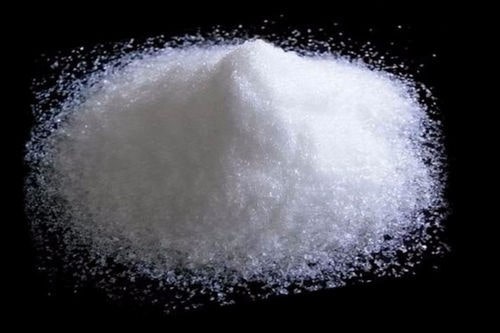
Sodium nitrate (NaNO3) is a crystalline compound and a potent oxidiser that acts as a fining agent, degasser, and iron oxidiser in glass batch formulations. Process engineers and plant operators incorporate this mineral compound into their batch designs to achieve clear, seed-free glass with consistent colour. This article examines the operating mechanisms, technical benefits, and key processing considerations of sodium nitrate in industrial glassmaking.
The Role of Sodium Nitrate in Glass Batch Formulations
Silicate glass consists primarily of silica sand, soda ash, limestone, and specialised refining additives. In this matrix, providing sodium oxide (Na2O) is essential to lower the melting temperature of silica. While soda ash serves as the primary source of alkali, a portion of the required sodium can be introduced via the nitrates family, specifically sodium nitrate.
As one of the most widely used inorganic chemicals in glass plants, sodium nitrate is far more than a simple sodium carrier. Its fundamental value lies in its thermal decomposition behaviour and the off-gassing that occurs during the early to intermediate stages of melting. Decomposing at specific temperatures, it releases substantial quantities of oxygen, establishing and maintaining stable oxidising conditions both within the furnace atmosphere and throughout the molten bath.
Oxidation and Colour Control in Glassmaking
Iron compounds are inevitable impurities present in silica sand and industrial mineral raw materials. Iron typically occurs in glass in two oxidation states: ferrous iron (Fe2+) and ferric iron (Fe3+). The ferrous ion imparts an intense blue-green coloration that significantly reduces luminous transmittance, which is highly undesirable in architectural float glass, clear container glass, and tableware.
The addition of sodium nitrate creates the oxidising conditions required to convert divalent ferrous iron into trivalent ferric iron. The ferric ion produces a very faint yellow hue with significantly lower optical absorption than the ferrous form. When combined with physical decolourisers such as selenium, cobalt, or manganese, a completely colourless, high-clarity glass matrix is achieved. This process is known as chemical decolourisation.
Thermal Decomposition Mechanism of Sodium Nitrate in the Furnace
During furnace heating, sodium nitrate begins thermal decomposition within the 380 °C to 500 °C range. Initially, the salt converts into sodium nitrite and active oxygen. At higher temperatures, nitrogen oxides and sodium oxide are released:
- Decomposition of nitrate into nitrite and active oxygen
- Oxidation of organic and carbonaceous matter in the raw batch
- Complete decomposition of nitrite into sodium oxide, which incorporates into the silicate network
- Release of nitrogenous gases that assist in the natural convective stirring of the melt layers
This thermal profile not only guarantees oxidising conditions but also promotes the smooth progression of solid-state reactions into a uniform liquid silicate phase. While other derivatives such as sodium nitrite serve similar functions in specific industrial sectors, sodium nitrate remains the preferred choice in melting operations due to its higher available oxygen capacity.
Degassing and Fining of the Glass Melt (Fining Process)
A major challenge in industrial glass melting is the elimination of gas bubbles generated by carbonate decomposition and air trapped between sand grains. If these gas inclusions are not expelled before forming, structural defects known as seeds or blisters remain in the glass, compromising both mechanical strength and visual clarity.
Sodium nitrate functions as an essential fining agent. As it decomposes, large volumes of oxygen gas are released deep within the melt. These large oxygen bubbles ascend rapidly toward the melt surface, coalescing with and sweeping along microbubbles of nitrogen, carbon dioxide, and water vapour. Governed by Stokes' law of fluid dynamics in molten glass, this bubble growth and ascent exponentially accelerates gas removal and promotes deep homogenization of the molten bath.
Benefits of Sodium Nitrate Across Different Glass Types
Industrial glass covers a broad spectrum of formulations, each demanding precise technical characteristics. As a versatile mineral salt, sodium nitrate is widely utilised across several glass production sectors:
- Pharmaceutical and Food Packaging Glass: Preserves the integrity of active ingredients and foodstuffs by ensuring chemical durability and high optical clarity in the container.
- Float and Architectural Sheet Glass: Minimises colour banding and maximizes natural light transmission in window glazing and insulated glass units.
- Borosilicate and Technical Glass: Controls oxidation state to maintain a low coefficient of thermal expansion and optimal thermal shock resistance.
- Ophthalmic and Lightweight Optical Glass: Improves refractive index homogeneity and structural uniformity throughout the lens blank.
- Enamels and Glass Frits: Serves as a powerful flux that enables lower-temperature smelting of complex silicate systems.
The sodium oxide introduced through sodium nitrate decomposition also lowers melt viscosity within the working temperature range. This viscosity reduction significantly enhances machine speeds on automated forming equipment, such as Individual Section (IS) container machines.
Comparison of Sodium Nitrate with Alternative Oxidisers
In glass engineering, other compounds—such as potassium nitrate, cerium oxide, and sulphates—are also employed as oxidising or fining agents. Selecting among these materials involves balancing raw material costs, melt rheology, and plant environmental standards.
Potassium nitrate provides superior acoustic resonance and brilliance in lead crystal and premium stemware, but it carries a higher raw material cost than sodium nitrate. Sulphates, while powerful refining agents, are more sensitive to fluctuations in furnace atmosphere and can cause amber sulphide defects (sulphur amber coloration) under reducing conditions. Consequently, sodium nitrate provides an optimal balance of oxidation power and cost efficiency in clear container and flat glass manufacturing.
Furthermore, in electric melters where direct combustion flames are absent, controlling the oxidation-reduction (redox) state via nitrate salts is more precise. This precise redox control also substantially mitigates the oxidative corrosion of molybdenum electrodes.
Quality Control and Safety Considerations
Sodium nitrate is a strong oxidiser, and its storage and handling require compliance with standard industrial safety procedures. Contact with organic compounds, combustible materials, or coal dust presents a combustion hazard. As a result, storage silos, transfer lines, and automated weighing systems in batch plants must remain dry, well-ventilated, and completely segregated from organic residues.
The table below outlines key quality parameters monitored by technical teams when sourcing sodium nitrate for glass production:
| Quality Parameter | Technical Significance in Glassmaking |
|---|---|
| Chemical Purity | Prevents unintended elements from disrupting the glass formula |
| Free Moisture Content | Prevents caking and automated batch-weighing errors |
| Chloride Impurities | Minimises refractory attack and prevents surface haze on the glass |
| Iron and Heavy Metal Content | Guarantees optical clarity and neutral glass colour |
| Particle Size Distribution (Mesh) | Ensures uniform batch blending and prevents segregation during transport |
Inconsistent particle sizing can cause sodium nitrate to segregate from the batch during pneumatic conveying or charging, resulting in localised redox fluctuations and colour variation during drawing or moulding. Process engineers recommend closely matching the grain size of the nitrate salt to that of the base silica sand prior to entering the batch mixer.
Environmental Considerations and Furnace Emission Management
Stricter environmental regulations on air quality have placed nitrogen-bearing raw materials under closer regulatory scrutiny. During the thermal breakdown of sodium nitrate, a portion of the released nitrogen oxides (NOx) enters the furnace flue gas stream. Glass manufacturing facilities mitigate these emissions using secondary abatement technologies, including Selective Catalytic Reduction (SCR) and Selective Non-Catalytic Reduction (SNCR) systems.
Nonetheless, precise batch optimization can keep NOx generation to an absolute minimum. By fine-tuning the raw batch chemistry and balancing the oxidiser ratio, manufacturers can achieve defect-free, crystal-clear glass while maintaining strict compliance with international environmental emission limits.
Conclusion
The use of sodium nitrate in glass production is a proven, highly efficient method for enhancing the optical clarity, mechanical integrity, and batch uniformity of commercial glass. By serving the dual role of oxidising chromophore iron ions and fining the molten bath, it eliminates physical defects while preserving colour stability. Mastering its thermal decomposition behaviour and ensuring uniform batch distribution remain fundamental to maximizing furnace throughput and product quality in modern glassmaking operations.