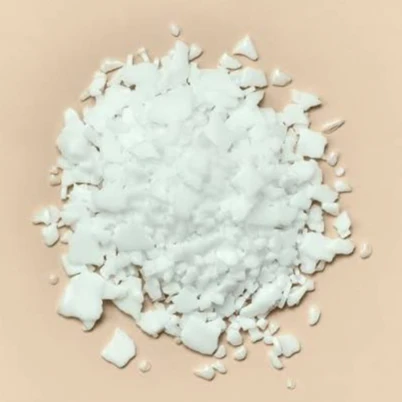
The energy storage industry is in constant pursuit of higher energy density, extended cycle life, and stable performance across wide temperature ranges. Within this landscape, the application of potassium hydroxide in battery manufacturing plays a foundational role, as this strong base provides one of the most efficient charge-transport media in electrochemical systems. Potassium hydroxide, commonly known in technical terminology as caustic potash or KOH, forms the backbone of both consumer and industrial alkaline battery technologies due to its distinctive physicochemical properties.
The electrolyte is a critical battery component that facilitates ionic transport between the positive and negative electrodes. Without an electrolyte exhibiting high ionic conductivity and minimal internal resistance, sustaining high discharge currents is impossible. This article examines the vital role of potassium hydroxide, the engineering rationale behind its selection over alternative chemical compounds, and its operating mechanism across various energy storage systems.
Chemical Fundamentals and the Role of KOH in Battery Manufacturing
Potassium hydroxide is a strong inorganic base that dissociates completely into hydroxide ($OH^-$) and potassium ($K^+$) ions upon dissolution in water. The exceptionally high ionic mobility of hydroxide ions in the aqueous phase gives the solution outstanding electrical conductivity. In basic chemical classifications, this compound belongs to the bases and alkalis group, where its strong alkaline characteristics are leveraged in battery oxidation and reduction reactions.
Compared to other hydroxide compounds, KOH provides an exceptionally high specific conductivity that peaks at standard industrial concentrations. This aqueous medium typically offers superior ionic conductivity relative to sodium hydroxide or weak acid formulations. For this reason, utilizing potassium hydroxide in battery manufacturing has become the standard across multiple generations of electrochemical cells.
Beyond its conductivity, aqueous potassium hydroxide exhibits an exceptionally low freezing point. This technical property prevents the electrolyte from freezing at sub-zero temperatures, ensuring stable operation of energy storage systems in cold climates. Such low-temperature resilience is a decisive advantage in telecommunications infrastructure, aerospace systems, and heavy-duty vehicle batteries.
Potassium Hydroxide Across Battery Chemistries
The application of this alkaline compound is not restricted to a single battery chemistry; several electrochemical systems rely on its specific properties:
- Primary Alkaline Batteries (Standard Alkaline): The KOH electrolyte directly supports reaction kinetics during zinc oxidation and manganese dioxide reduction.
- Rechargeable Nickel-Cadmium (Ni-Cd) Batteries: Potassium hydroxide transports hydroxide ions while remaining chemically stable without degradation.
- Nickel-Metal Hydride (Ni-MH) Batteries: High ionic flux supported by the KOH electrolyte facilitates higher power output densities.
- Zinc-Air Batteries: The alkaline solution provides the reaction medium for atmospheric oxygen reduction, driving fuel cell-like air-breathing configurations.
Standard Alkaline Batteries (Zinc-MnO2)
In commercial cylindrical cells, the anode consists of zinc powder dispersed in a gelling agent, while the cathode is made of manganese dioxide. Potassium hydroxide serves as the liquid electrolyte phase permeating this gel, establishing continuous ionic contact with the zinc particles. The abundant hydroxide ions facilitate electron transfer without driving up internal cell resistance.
Compared to traditional Leclanché and zinc-carbon cells that utilize ammonium chloride or zinc chloride, cells formulated with KOH deliver several times higher energy density. They also exhibit superior voltage stability throughout discharge and minimal self-discharge during storage.
Industrial Rechargeable Nickel-Based Batteries
In nickel-cadmium and nickel-metal hydride batteries, the concentration of potassium hydroxide remains virtually unchanged through charge and discharge cycles. Hydroxide ions transfer reversibly between electrodes, meaning the active electrolyte component suffers no structural depletion.
This chemical stability allows these cells to achieve operating lifetimes of hundreds or even thousands of cycles without electrolyte failure. In advanced manufacturing lines, adding controlled quantities of lithium hydroxide to the KOH electrolyte is standard practice to extend cathode active material life.
Comparing Potassium Hydroxide and Caustic Soda in Electrolytes
A frequent question in materials engineering concerns the performance differences between caustic potash and sodium hydroxide, or caustic soda flakes, in energy storage systems. Both are strong bases, and caustic soda offers lower initial material costs. However, clear technical factors favor potassium hydroxide in battery applications.
The hydrated radius of the potassium ion in water is smaller than that of the sodium ion. This smaller effective size reduces hydrodynamic drag between the ion and surrounding water molecules, resulting in higher electrophoretic mobility for $K^+$. Consequently, the electrical conductivity of a potassium hydroxide solution is considerably higher than that of a sodium hydroxide solution at identical concentrations and temperatures.
Furthermore, reaction byproducts like zincates demonstrate higher solubility in KOH, which prevents the premature precipitation of passivating films on electrode surfaces. The eutectic point of the potassium hydroxide-water system is also substantially lower than that of the sodium hydroxide-water system, preventing cell failure in sub-zero environments. For broader technical context on alkaline chemicals, consult the hydroxides category.
Quality Control Parameters and Impurities in Battery Electrolytes
In modern battery assembly, potassium hydroxide purity directly dictates self-discharge rates. Heavy metal impurities—particularly iron, copper, and nickel—must be strictly controlled; their presence depresses the hydrogen overpotential on negative electrodes, triggering parasitic gas generation within the cell.
Hydrogen gas buildup increases internal cell pressure, elevating the risk of alkaline leakage and mechanical rupture. Tier-one manufacturers rely on ultra-pure grades of KOH derived from high-purity potassium chloride feedstocks. As detailed in Application of Potassium Chloride in Chemical Industries: A Comprehensive Review of Potash's Role, upstream salt purity directly governs the quality profile of downstream chlor-alkali products.
Another critical degradation pathway in alkaline electrolytes is carbonation. When exposed to ambient air, potassium hydroxide readily reacts with atmospheric carbon dioxide to form potassium carbonate:
$$2\text{KOH} + \text{CO}_2 \rightarrow \text{K}_2\text{CO}_3 + \text{H}_2\text{O}$$
The resulting potassium carbonate exhibits lower solubility, precipitating within separator micropores. This clogging sharply increases internal cell resistance and limits high-rate pulse discharge capability. Consequently, electrolyte preparation and cell filling are carried out under controlled atmospheres or with carbon dioxide scrubbers in place.
Handling, Safety, and Storage Requirements for KOH Solutions
Potassium hydroxide is aggressively hygroscopic, readily absorbs carbon dioxide, and is classified as a strongly corrosive chemical. Within electrolyte preparation and filling plants, storage tanks must be fabricated from compatible stainless steels or resistant polymers such as polypropylene (PP) and high-density polyethylene (HDPE). Direct contact causes deep chemical burns, making rigorous personal protective equipment (PPE) mandatory for plant operators.
Precise verification of solution concentration and density is required prior to cell injection. In production quality laboratories, assay purity, specific conductivity, and carbonate content are continuously tracked using titration and conductometric analysis to ensure tight adherence to electrochemical specifications.
Future Outlook for Caustic Potash in Advanced Energy Storage
As the demand for high-rate batteries and utility-scale renewable storage systems expands, next-generation alkaline systems continue to attract research. Advanced zinc-air configurations and alkaline fuel cells using optimized potassium hydroxide formulations offer lower levelized costs of storage alongside exceptional safety profiles, operating without the thermal runaway risks of lithium chemistries.
Furthermore, the introduction of functional polymers into KOH electrolytes to produce semi-solid gel electrolytes provides clear opportunities to prevent leakage and enable flexible cell designs. With its thermodynamic stability and rapid charge-transfer kinetics, potassium hydroxide remains an indispensable electrolyte base in the electrochemical engineering roadmap.
Ultimately, battery system performance is governed by component purity and chemical control. A detailed understanding of alkaline electrolyte behavior allows chemical engineers and battery manufacturers to optimize discharge capacity, mitigate cell degradation, and deliver robust products to global markets.