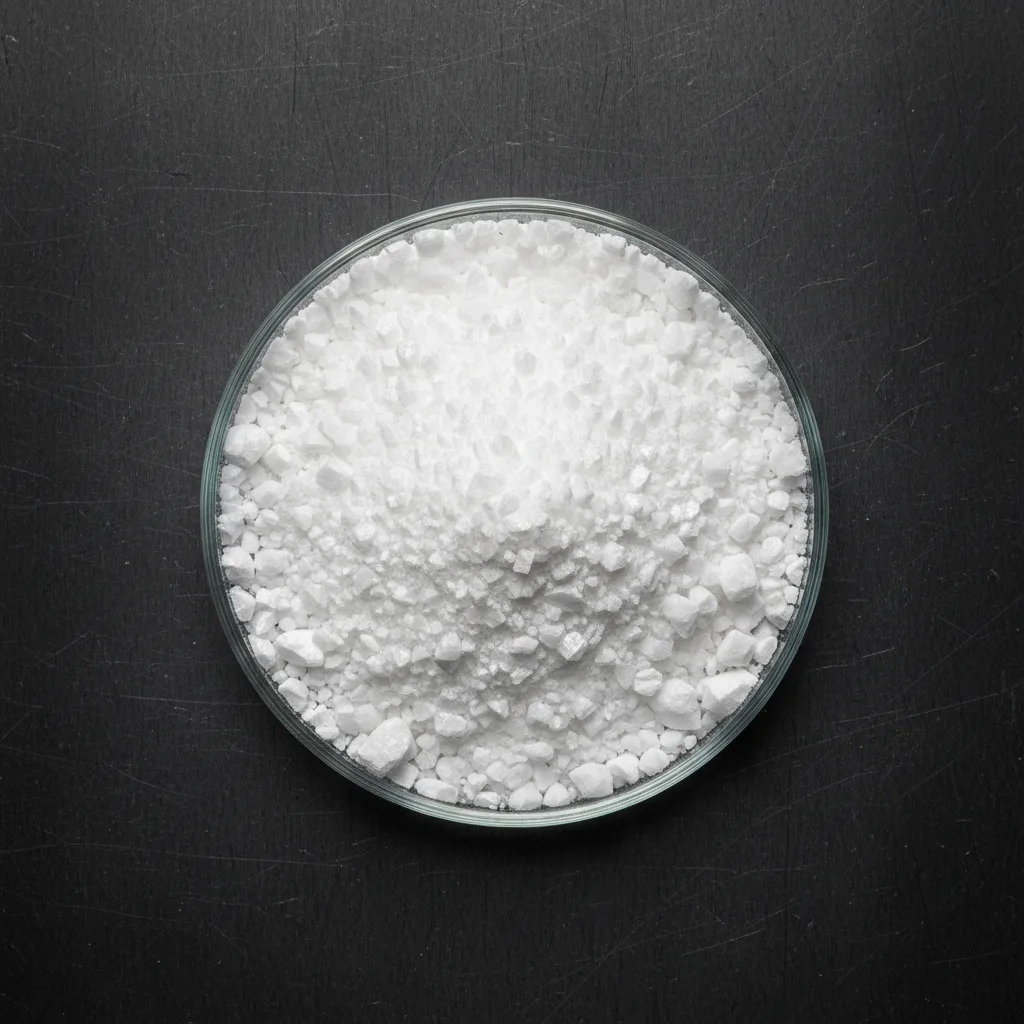

The textile industry represents one of the most intricate and sensitive sectors of industrial manufacturing, where the quality of the final product depends heavily on wet finishing and dyeing chemical processes. The fastness of fabric coloration against washing, rubbing, perspiration, and sunlight is the primary benchmark for evaluating fabric performance. Within this framework, high-grade inorganic salts and compounds play a fundamental role in color fixation. The application of potassium nitrate in fabric dye fixation has gained significant traction among textile engineers and specialists as an efficient method to enhance dye stability and forge durable bonds between colorants and textile fibers.
Inorganic compounds within the nitrates group are widely utilized across multiple sectors, including dyes and textiles, due to their controlled oxidative properties, high water solubility, and clean dissolution without forming problematic precipitates. A clear understanding of how this chemical functions in dye baths and textile printing pastes allows textile engineers to optimize finishing processes and minimize production waste.
The Role of Chemical Auxiliaries in Dyeing and Finishing Processes
Dyeing involves far more than the simple physical absorption of color molecules by fibers; it requires precise physicochemical interactions to fix dye molecules firmly within the fiber's polymeric structure. If these bonds fail to form properly, the color bleeds out during initial washing or fades prematurely under abrasion. Consequently, textile processing mills routinely rely on select inorganic chemicals to drive reactions and adjust the ionic balance of the dye bath.
During dyeing cycles, electrolytes and fixing agents assist in transferring dye molecules from the aqueous liquor onto the fiber surface and promoting their subsequent diffusion into the fiber core. Among available inorganic salts, potassium nitrate provides an exceptionally stable medium for color-complex formation through its active potassium and nitrate ions. In addition to boosting colorfastness, this compound contributes significantly to achieving a uniform, level color shade across the fabric.
Mechanism and Application of Potassium Nitrate in Dye Fixation
Potassium nitrate ($KNO_3$) is a neutral salt offering high water solubility, dissociating fully in aqueous media into potassium ($K^+$) and nitrate ($NO_3^-$) ions. In dye baths containing natural fibers such as cotton and wool, electrostatic repulsive forces between anionic dyes and the negative surface charges of the fiber often hinder thorough dye penetration. The potassium cations generated upon dissolution neutralize these surface charges, clearing the path for dye molecules to penetrate the intermolecular spaces of the fiber matrix.
Furthermore, the nitrate anion exhibits mild oxidizing properties under controlled temperature and pH conditions. This attribute is particularly advantageous for fixing vat dyes and sulfur dyes following their reduction stage. In practice, potassium nitrate governs the re-oxidation of the leuco dye in a gradual, homogenous manner, resulting in superior wash fastness. This controlled oxidation prevents dark or pale streaking caused by abrupt, uncontrolled oxidation rates.
Advantages of Potassium Nitrate Over Alternative Salts
Employing potassium nitrate over conventional textile salts such as common chlorides and sulfates delivers distinct technical advantages:
- Superior Solubility Across Temperatures: It dissolves rapidly in hot dye liquor, leaving behind no suspended particles or undissolved crystalline matter.
- Mitigated Machinery Corrosion: Unlike chlorides, which induce severe pitting and stress corrosion in stainless steel dyeing vessels and kiers, potassium nitrate exhibits minimal corrosiveness.
- Enhanced Shade Brilliance: Thanks to its high chemical purity, it prevents color dulling or shade shifts on delicate, pale shades.
- Broad Dye Compatibility: It functions effectively across reactive, vat, direct, and pigment dyeing systems applied to cellulosic and protein substrates.
Potassium Nitrate in Fabric Printing and Color Pastes
Another critical application of potassium nitrate in textile color fixation is its incorporation into textile printing paste formulations. In direct and discharge printing processes, maintaining moisture balance, controlling rheological viscosity, and preventing premature dye oxidation prior to steaming are vital. Potassium nitrate acts as a stabilizing agent within print pastes.
When printed fabric enters the ager, steaming tunnel, or curing oven, thermal energy triggers fixation reactions. At this stage, potassium nitrate maintains a uniform thermal-oxidative environment, allowing the dye to crosslink irreversibly with the fiber. This controlled reaction prevents paste bleeding and pattern feathering, ensuring crisp line definition and sharp pattern outlines.
Additionally, in specialized discharge printing styles, secondary intermediate agents such as sodium nitrite within the broader family of nitrites may be utilized for specific reductive or controlled oxidation functions, illustrating the nuanced chemical balance required in precision textile printing.
Controlling Process Parameters in the Fixation Bath
Achieving maximum operational efficiency when utilizing potassium nitrate for dye fixation demands stringent control over processing parameters. The salt concentration in exhaust or fixation baths must be calibrated against the dry weight of fabric (owf) and the molecular structure of the specific dyestuff. Overdosing can cause localized dye aggregation and superficial precipitation, while inadequate dosage results in poor exhaustion and incomplete fixation.
Key parameters governing potassium nitrate performance include:
- Bath Temperature: Proper operating temperatures accelerate ionic dissociation and drive dye diffusion into the fiber structure.
- pH Regulation: Consistent pH monitoring is critical, as extreme acidity or high alkalinity can alter the oxidative behavior of the nitrate ion.
- Liquor Circulation Rate: Homogeneous circulation in jet, winch, or package dyeing machinery guarantees uniform salt contact across the entire fabric surface.
Effluent Optimization and Environmental Considerations
Beyond in-process technical performance, wastewater management represents a vital priority for modern textile wet-processing facilities. Selecting high-grade chemical inputs and precise dosing protocols directly decreases the pollution load carried in plant effluent. Due to the high fixation yields achieved with potassium nitrate, the volume of hydrolyzed, unfixed dyestuff remaining in spent dye baths drops markedly, which measurably reduces the chemical oxygen demand (COD) and residual color of discharge streams.
Biological wastewater treatment units can readily manage and monitor nitrogenous streams through established nitrification and denitrification stages. Operating with consistent, high-purity raw materials enables processing plants to satisfy rigorous environmental discharge standards without compromising batch productivity or cycle times.
Conclusion
Achieving superior colorfastness and preserving fabric quality through rigorous washing and extended consumer use requires exact control over dye chemistry parameters. Technical analysis confirms that applying potassium nitrate in fabric dye fixation offers an effective, reliable solution to raise exhaustion efficiency, fix pigments and dyes securely, and safeguard machinery against corrosive damage. Specifying consistent, industrial-grade raw materials ensures shade repeatability and reduced re-dye rates throughout modern printing, dyeing, and finishing operations.