
The Role of Molten Salts in Surface Engineering and Heat Treatment
Steel heat treatment is a cornerstone process in enhancing the mechanical properties of industrial components. Metallurgical engineers constantly seek methods to minimize distortion, cracking, and residual stresses during heating and cooling cycles. Among these methods, molten salt baths represent one of the most effective solutions. The application of potassium nitrate in steel hardening operations, particularly in controlled cooling and stress-relief processes, plays an established and vital role.
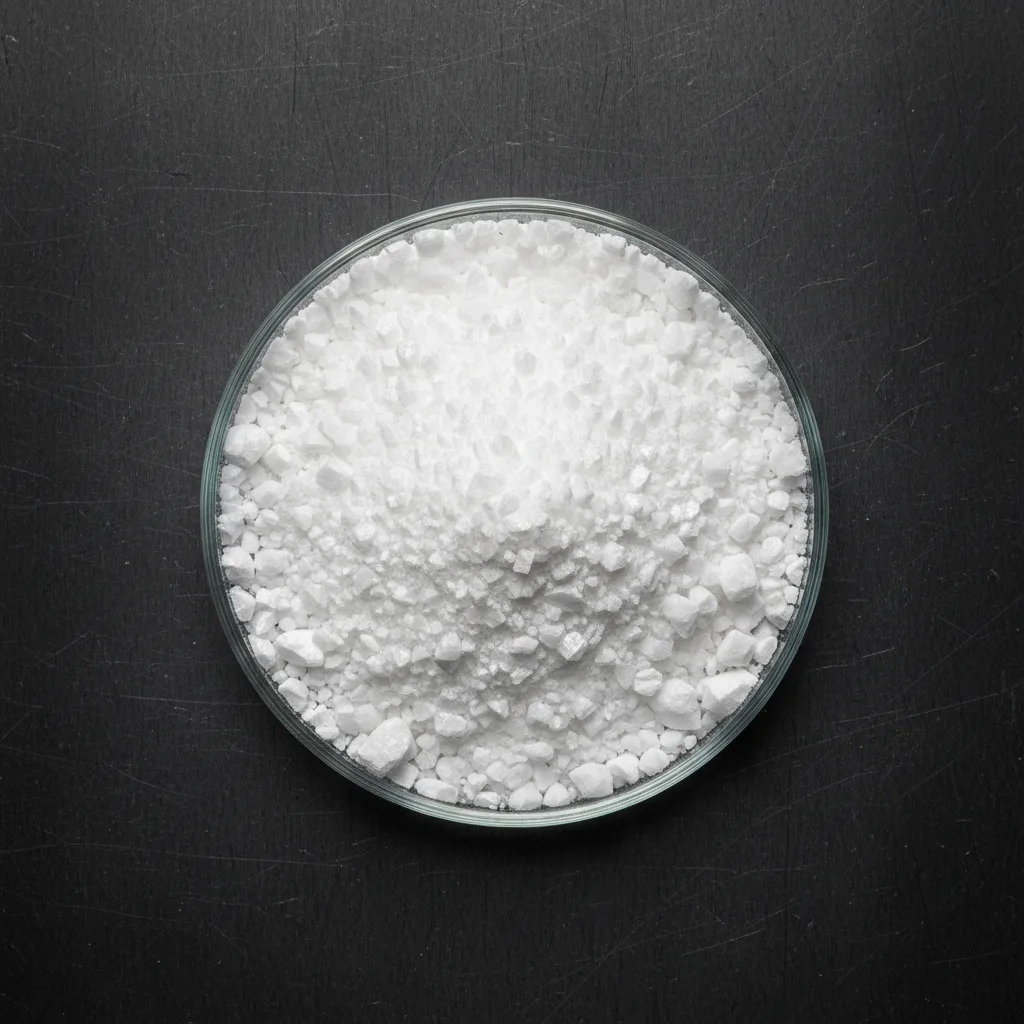
As a primary compound within the nitrates group, potassium nitrate is widely utilized across heat treatment and metallurgical sectors due to its unique thermophysical characteristics, high fluidity in the molten state, and chemical stability at medium operating temperatures. Alongside complementary additives, this inorganic salt creates a homogeneous medium for uniform heat transfer.
A precise understanding of the chemical properties and thermal behavior of this compound enables professionals in machinery manufacturing, cutting tool fabrication, and automotive parts production to enhance surface hardness, wear resistance, and component toughness.
Applications of Potassium Nitrate in Hardening Operations and Metallurgical Processes
Hardening steel requires reaching austenitizing temperatures followed by rapid cooling at specified rates to form hard phases such as martensite or bainite. The application of potassium nitrate in steel hardening operations is predominantly associated with two advanced interrupted cooling techniques: martempering and austempering.
In traditional quenching using water or oil, abrupt temperature drops cause severe thermal shock and warping in engineering parts with complex geometries. Salt baths containing potassium nitrate allow the hot workpiece to be held at a temperature just above the martensite start point, ensuring that both the core and surface equalize at the same temperature.
Following isothermal equalization, the component is air-cooled, forming the martensite phase without inducing severe structural stresses. Similarly, in the austempering process, extended holding within the salt bath produces a bainitic structure characterized by exceptional strength and toughness.
Technical Advantages of Molten Salts in Heat Treatment Baths
Employing nitrate-based molten salts delivers several technical advantages over gaseous atmospheres or conventional quench fluids:
- Rapid and Uniform Heat Transfer: Direct contact of liquid salt across all component surfaces yields heat transfer rates multiple times faster than atmospheric furnaces.
- Minimized Decarburization: The molten salt forms a protective barrier around the workpiece, shielding hot steel from oxygen exposure and eliminating surface decarburization.
- Minimal Distortion and Stress: A uniform cooling rate across critical phase-transformation ranges significantly decreases warping in precision industrial parts.
- Precise Temperature Control: The thermal stability of molten salts allows operators to maintain bath temperatures with tight tolerances.
Thermochemical Behavior of Potassium Nitrate in Salt Baths
Potassium nitrate is an essential inorganic chemical that acts as a stable oxidizer at intermediate temperatures. For optimal heat-treatment bath performance, it is rarely utilized in isolation; its pure melting point sits at approximately 334 °C, which is relatively high for specific quenching processes.
To lower the freezing point and achieve eutectic mixtures with broader operating ranges, potassium nitrate is blended with other inorganic salts, particularly sodium salts. One of the most prevalent formulations for hardening and tempering baths is a eutectic mixture of potassium nitrate, sodium nitrate, and sodium nitrite. This formulation reduces the mixture's melting point down to approximately 140 to 150 °C.
The chemical stability of these formulations remains excellent in the presence of atmospheric oxygen, showing no significant thermal decomposition up to approximately 550 °C. However, exceeding safe temperature limits can trigger oxide gas evolution and alter the functional behavior of the bath.
The Role of Nitrate Baths in Steel Annealing and Tempering Processes
Beyond isothermal cooling and quenching, potassium nitrate plays a prominent role in tempering hardened steels. Freshly quenched steel, while possessing high hardness, remains brittle and prone to failure. To restore toughness and relieve internal structural stresses, the component must be reheated to a designated temperature.
Nitrate salt baths serve as an ideal environment for tempering within the 150 to 500 °C range. Within this window, components reach a uniform core-to-surface temperature far quicker than in convection air furnaces, maintaining homogeneous final hardness across the entire cross-section. This technique is extensively implemented in manufacturing automotive springs, industrial cutting blades, rotary shafts, and tooling dies.
Precise control over immersion duration and bath temperature ensures that final hardness metrics align strictly with client specifications and engineering design standards.
Technical and Safety Considerations for Handling Potassium Nitrate Baths
Operating molten salt baths demands rigorous adherence to engineering guidelines and industrial safety protocols. Potassium nitrate is a strong oxidizer; direct contact of the molten salt with organic materials or reactive metals can result in hazardous incidents.
Key operational and safety directives for managing nitrate baths include:
- Thorough Preheating and Drying: Metal components must be thoroughly dried and preheated before entering the molten bath; moisture ingress into salts above 200 °C causes instantaneous steam explosions and molten salt splatter.
- Elimination of Organic Contaminants: Parts must be completely degreased to remove cutting fluids, oils, grease, and carbonaceous soils, as contact between oil and molten nitrate presents severe combustion risks.
- Strict Bath Temperature Monitoring: Allowing bath temperatures to exceed 550 °C can trigger accelerated nitrate breakdown, generating hazardous alkaline by-products and corrosive conditions.
- Post-Treatment Cleaning Equipment: Because potassium nitrate is highly soluble in water, dragout salt solidified on part surfaces can be removed readily via hot-water wash systems.
Comparative Analysis of Nitrate Baths vs. Alternative Quench Media
Selecting an optimal hardening medium involves evaluating component dimensions, steel chemistry, and operating economics. Various liquid media are employed for steel cooling, each defined by distinct thermodynamic characteristics:
| Technical Parameter | Nitrate Salt Bath | Quenching Oil | Water & Polymer Solutions |
|---|---|---|---|
| Operating Temperature Range | 150 to 550 °C | 40 to 120 °C | 20 to 60 °C |
| Distortion & Cracking Risk | Very Low (gradual isothermal cooling) | Moderate | High (severe instantaneous thermal shock) |
| Residual Stress Management | Excellent (martempering/austempering) | Limited | Poor |
| Post-Treatment Cleaning | Very Easy (hot water rinsing) | Requires degreasers and solvents | Easy |
| High-Temperature Fire Safety | Inherently non-flammable (requires organic exclusion) | Flammability risk at elevated temperatures | Non-flammable |
This comparison underscores that for critical, high-precision components, investing in potassium nitrate salt bath systems represents an economically sound decision that minimizes production scrap rates.
Future Outlook for Potassium Nitrate in Modern Metallurgy
Advanced component manufacturing continues to adopt tighter engineering tolerances. In this demanding manufacturing environment, any uncontrolled distortion caused by heat treatment introduces costly post-hardening machining and grinding operations. Utilizing high-purity potassium nitrate maximizes bath stability and prevents undesirable sludge accumulation at the bottom of the furnace.
Selecting high-grade chemical raw materials for heat-treating baths ensures repeatable mechanical properties and dependable performance under severe industrial service conditions. Materials engineers maintain that base-salt purity directly dictates heat transfer uniformity, directly extending the fatigue life of hardened components.