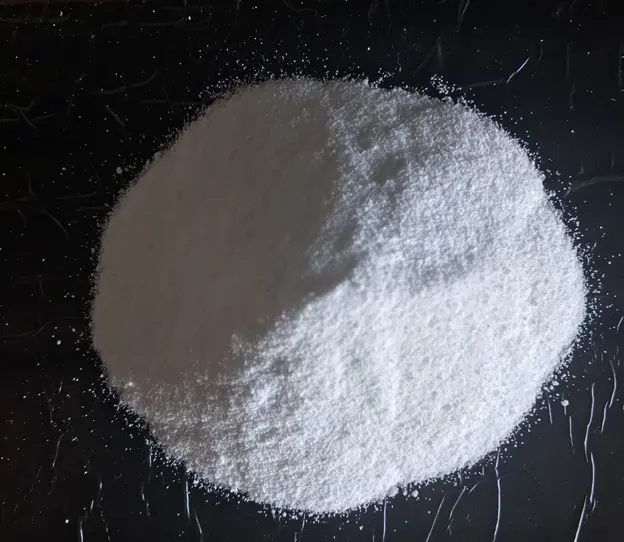

The upstream oil and gas industry continually encounters numerous geomechanical challenges while drilling wells. One of the most critical challenges is wellbore instability when drilling through clay and shale formations. To control this phenomenon, drilling fluid engineers employ various chemical additives, among which the application of potassium chloride in oil and gas drilling holds a prominent position. Potassium chloride (KCl) is recognized as one of the most effective additives for preventing clay hydration and swelling, significantly enhancing the performance of water-based drilling fluids.
A thorough understanding of clay mineral behavior upon contact with the liquid phase of drilling mud forms the fundamental basis for designing stabilizing formulations. Selecting the appropriate salt not only guarantees the mechanical stability of the borehole wall, but also prevents stuck pipe incidents and reservoir formation damage.
Role of Potassium Chloride in Drilling Mud
In water-based drilling systems, utilizing inorganic salts to control water activity and inhibit formation reactivity is an operational necessity. Among these, potassium chloride is considered a vital compound due to its high efficiency in cation exchange with clay particles. When the drill bit cuts through shale sections, free water in the fluid tends to penetrate the clay lattice, triggering volumetric expansion.
Adding potassium chloride to the mud system increases the concentration of active ions and establishes the necessary electrochemical balance. Consequently, this chemical is regarded as one of the most critical compounds within the chlorides category for formulating non-damaging drilling muds.
Ion Exchange Mechanism and Shale Swelling Inhibition
The swelling of shale formations typically stems from the hydration of minerals such as smectite and montmorillonite. The layered structure of these minerals carries a net negative charge balanced by hydrated cations such as sodium. When potassium ions are present in the continuous phase of the mud, the following process occurs:
- The potassium ion has an ionic radius that fits exceptionally well into the hexagonal cavities of the clay crystal lattice.
- This ion enters the interlayer space and displaces exchangeable sodium cations.
- Due to its low hydration energy, potassium attracts less water and reduces the basal spacing between clay platelets.
- As a result, the clay structure is locked, preventing particle dispersion and formation swelling.
This stabilizing action maintains the shear strength of the wellbore wall and minimizes mechanical erosion caused by the circulating fluid stream.
Benefits of Using KCl in Water-Based Drilling Muds
KCl-polymer mud systems have long served as an established industry standard in challenging shale environments. These systems offer significant technical advantages that safeguard operational efficiency. One of the most important outcomes is the reduction of non-productive time (NPT) caused by wellbore sloughing, pipe sticking, and reaming operations.
Furthermore, the presence of stabilizing salts contributes considerably to preserving the rheological properties of the mud. When shale does not disperse into the mud system, the plastic viscosity and yield point remain within their engineered design limits. Filtrate loss into permeable zones is also managed much more effectively.
Compatibility with Drilling Engineering Polymers
Potassium chloride exhibits outstanding compatibility with a wide range of viscosifying and fluid-loss control polymers. Polymers such as polyanionic cellulose (PAC), xanthan gum, and modified starches reliably maintain their structural integrity in the presence of this salt. This synergy produces a thin, impermeable filter cake on the wellbore wall, preventing the transmission of hydrostatic pressure into formation pores.
Alongside these additives, alkalinity control agents from the bases and alkalis category establish the optimal fluid environment to maximize the inhibitive efficacy of the potassium ion.
Application of Potassium Chloride in Completion and Workover Fluids
Beyond drilling muds, the application of potassium chloride in oil and gas drilling extends to final well delivery stages and workover operations. Completion fluids are clear, solids-free brines engineered for perforating, production tubing installation, and well workovers. Utilizing potassium chloride brine (KCl brine) prevents formation damage in the hydrocarbon-bearing pay zone.
The influx of fresh water into a reservoir matrix containing clay minerals can cause pore throat plugging and severe permeability impairment. Potassium brine maintains the ionic equilibrium within pore spaces, preventing fine migration and blockages along oil and gas production paths.
Comparing Potassium Chloride with Other Inhibitive Salts
Although alternative salts are used in drilling operations, the mineral-stabilizing properties of potassium remain distinct. The following overview outlines the operational characteristics of commonly used salts:
- Sodium Chloride (NaCl): Readily available and cost-effective, but its shale-inhibition capability is limited due to the large hydration radius of the sodium ion.
- Potassium Chloride (KCl): Excellent performance in locking clay platelets, reducing surface hydration, and effectively arresting structural swelling.
- Calcium Chloride (CaCl2): Capable of achieving higher fluid densities, but exhibits lower compatibility with certain polymers compared to KCl.
These advantages make potassium-based systems the primary choice for chemical engineers working in sensitive formations. In operations that require specialized additives such as sodium nitrite for corrosion inhibition of downhole metal equipment, evaluating the electrochemical behavior of the fluid remains an integral part of system design.
Environmental Considerations and Drill Cuttings Management
An essential aspect of potassium chloride utilization is the environmental management of drill cuttings. Compared to oil-based muds (OBM), KCl-containing fluids have lower toxicity, allowing drill cuttings treatment and disposal to be carried out at lower costs.
Nevertheless, the unmonitored discharge of high-salinity effluent onto soil or surface water resources requires rigorous control. Accordingly, the drilling industry employs advanced solids control equipment, including high-G shale shakers and centrifuges, to recover the liquid phase and reduce the consumption of inorganic chemicals, addressing both economic efficiency and environmental compliance.
Conclusion
Stabilizing shale formations and preventing borehole collapse are fundamental requirements for achieving drilling objectives in deep formations. The application of potassium chloride in oil and gas drilling represents a scientifically proven solution that optimizes the performance of water-based fluids and mitigates operational risks. Precise monitoring of potassium ion concentration, seamless compatibility with polymer additives, and mitigation of reservoir formation damage remain vital factors ensuring safety, efficiency, and productivity throughout drilling and well completion operations.