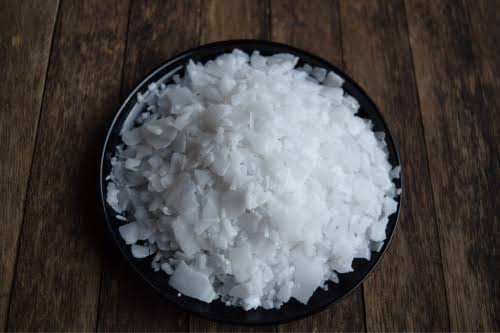

The textile industry is one of the world's oldest yet most technically demanding manufacturing sectors, where the quality of finished goods depends directly on preparatory operations, dyeing, and chemical finishing. Among the various industrial chemicals utilized across fiber processing stages, solid sodium hydroxide plays a vital and central role. The application of caustic soda flakes in textiles as a strong alkali spans a wide range of procedures, from early fiber scouring to improving the physical and aesthetic characteristics of fabrics. Achieving optimal quality in cotton and cellulosic blend textiles is practically impossible without it.
This chemical compound, with the molecular formula NaOH, dissolves exothermically in water to form strongly alkaline solutions. By utilizing this powerful alkalinity, textile processors modify the molecular structure of natural fibers—particularly cellulose—and create an optimal medium for dyestuff fixation. A thorough understanding of its chemical behavior, alongside strict control over operating parameters such as temperature, concentration, and reaction dwell time, is essential for successful wet textile processing.
Fiber Preparation and the Importance of Caustic Soda Flakes in Textiles
The preparatory stage, or pre-treatment, determines the ultimate quality of subsequent operations including dyeing, printing, and finishing. In their raw state, natural cotton fibers contain various impurities such as natural waxes, oils, pectins, hemicelluloses, and residual motes from leaves and seed coats. These hydrophobic substances prevent the uniform penetration of water and dyestuff liquors into the fiber core.
Utilizing products from the Bases and Alkalis category in this production stage serves to thoroughly eliminate these contaminants. In the scouring process, caustic soda flakes convert insoluble fatty acids and natural waxes into water-soluble sodium soaps via saponification. This chemical action substantially increases the wettability and capillary action of cotton fibers, setting the stage for uniform dye absorption.
Furthermore, during the desizing of warp yarns, caustic soda assists in hydrolyzing starch-based polymers and specific synthetic sizing agents, breaking down long polymer chains to accelerate efficient washing and removal.
Benefits of Alkaline Scouring with Sodium Hydroxide
Scouring operations using sodium hydroxide yield distinct enhancements in fiber properties:
- Conversion of plant ester waxes and fats into water-soluble soaps.
- Degradation and alkaline hydrolysis of pectins and hemicelluloses within the cotton cell walls.
- Swelling of residual cotton seed coats, facilitating their mechanical removal during washing.
- Significant enhancement of water absorbency and dye uptake uniformity.
The Role of Caustic Soda in the Mercerization Process
One of the most notable applications of caustic soda flakes in textiles is mercerization. Discovered by John Mercer, this process entails treating cotton yarn or fabric under mechanical tension with a concentrated sodium hydroxide solution.
In its native state, cellulose possesses a Cellulose I crystalline structure. When cotton fibers come into contact with concentrated caustic soda solutions, sodium ions and associated water molecules penetrate the intermolecular spaces between cellulose chains, forming new hydrogen bonds. This transition causes the fiber cross-section to swell, transforming its natural kidney-bean shape into an almost cylindrical, rounded profile.
After washing out the alkali while maintaining fabric tension, the cellulose lattice transitions into Cellulose II. This transformation imparts multiple physical and optical benefits to cotton goods:
- Distinct increase in fabric luster and surface reflectance due to a more uniform cross-sectional geometry.
- Enhanced fiber tensile strength resulting from a more uniform stress distribution along the polymer chains.
- Increased moisture regain capacity, followed by a significantly higher affinity for dyestuffs.
- Improved dimensional stability and reduced fabric shrinkage in subsequent laundering cycles.
pH Control and Fixation in Dye Baths
To achieve level and durable color shades, textile processors rely on various categories of Inorganic Chemicals and organic auxiliaries. In dyeing with reactive dyes, rigorous control of the alkaline medium is the decisive factor governing the formation of covalent bonds between dye functional groups and the hydroxyl groups of cellulose.
By providing hydroxide ions, caustic soda flakes deprotonate the hydroxyl groups on cellulose, converting them into reactive cellulosate anions. This negatively charged state exhibits a far higher affinity toward the electrophilic centers of the reactive dye molecule, generating stable ether or ester linkages. Without an adequate alkali concentration, dye fixation remains incomplete, severely impairing the fabric's wash fastness.
Caustic soda flakes are equally indispensable in vat and sulfur dyeing. These dyes are inherently water-insoluble and require a strongly alkaline reducing bath to be converted into their soluble leuco salt forms. Sodium hydroxide establishes the precise pH conditions needed for effective dye reduction and deep fiber penetration.
Differential Action of Caustic Soda on Cellulosic vs. Protein Fibers
Textile fibers exhibit starkly contrasting behaviors when exposed to strong alkalis:
- Cellulosic Fibers (Cotton, Viscose, Linen): Display excellent stability toward alkaline environments; controlled concentrations improve their physical and chemical structure.
- Protein Fibers (Wool and Silk): Highly sensitive and vulnerable to alkalis. The disulfide bonds and peptide linkages in wool rapidly degrade and hydrolyze in the presence of sodium hydroxide, causing the fiber to dissolve. Consequently, caustic soda is not used for processing protein fibers.
- Synthetic Fibers (Polyester): Under carefully controlled conditions, caustic soda is utilized in polyester weight-reduction processes to etch the fiber surface, imparting a softer hand feel similar to natural silk.
Applications in Bleaching and Textile Effluent Treatment
The bleaching process of fabric also relies on careful alkaline buffering. Hydrogen peroxide is the most widely utilized bleaching agent in textiles, and its oxidative performance depends strictly on liquor pH. Caustic soda stabilizes the pH within the optimal processing range, facilitating the controlled dissociation of hydrogen peroxide into perhydroxyl ions, which decolorizes natural yellow pigments present in raw cotton.
At the end of wet processing, wastewater management represents a critical environmental challenge for textile mills. Effluent originating from acid washing or neutralizing baths requires pH adjustment to comply with local discharge standards. Precise dosing of sodium hydroxide is often employed to neutralize acidic streams produced from Mineral Acids and to precipitate heavy metals as insoluble hydroxides.
Furthermore, wastewater monitoring, scale removal from washing machinery, and the regeneration of ion-exchange resins in textile boiler water softening systems all rely on this versatile chemical. Sourcing high-purity caustic soda ensures longer operational lifetimes for filtration membranes and processing lines.
Safety Precautions and Storage Guidelines for Caustic Soda
Sodium hydroxide is a strongly corrosive substance that can inflict severe chemical burns and permanent damage upon contact with skin or eyes. When solid flakes dissolve in water, an intense exothermic reaction occurs that can cause localized boiling and splashing. Operators must always add caustic soda flakes slowly to water, never pouring water directly onto dry flakes.
Personal protective equipment (PPE)—including heavy-duty nitrile gloves, chemical splash goggles, full face shields, and alkali-resistant protective clothing—is mandatory for all personnel handling caustic solutions. Because caustic soda flakes are hygroscopic, they must be stored in a dry, cool, well-ventilated warehouse in tightly sealed containers. Exposure to ambient air causes sodium hydroxide to absorb atmospheric carbon dioxide, converting it to sodium carbonate, which lowers its active chemical purity and process efficiency.
Conclusion
The modern textile industry relies on foundational chemicals to deliver high-performance, durable, and visually appealing fabrics. Sodium hydroxide plays an essential role across operations: saponifying natural impurities, optimizing luster and tensile strength during mercerization, driving covalent bonding in reactive dye baths, and neutralizing acidic effluent streams. Maximizing process efficiency and maintaining high fabric standards require rigorous parameter monitoring, certified raw material purity, and consistent adherence to plant safety standards.