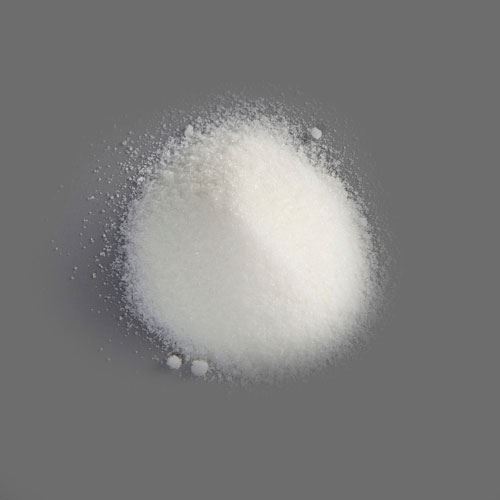

Heat treating and hardening metal components are fundamental steps in the manufacturing supply chain across industrial machinery, automotive, aerospace, and tooling sectors. To achieve the required hardness and tensile strength while minimizing distortion and quench cracking caused by thermal stress, metallurgical engineers rely on precision heating and cooling media. Within this domain, the use of sodium nitrite in hardening operations is recognized as an indispensable component of molten salt baths, playing an essential role in stabilizing thermal conditions for steel parts.
Owing to its distinct physical and chemical properties, this chemical compound allows molten baths to operate efficiently across low to medium temperature ranges, granting tight control over the microstructural phase transformations of steel. This article explores the metallurgical fundamentals, melt behavior, industrial advantages, and operational safeguards associated with this chemical.
The Role of Sodium Nitrite in Metallurgy and Heat Treatment
Steel heat treatment involves heating parts to their austenitizing temperature followed by controlled cooling to produce target microstructures such as martensite or bainite. A major challenge during this sequence is the severe thermal shock induced by conventional water or oil quenching, which frequently causes distortion or cracking in complex geometries. Molten salt baths have long served as an effective alternative, providing much gentler, highly uniform heat transfer.
Sodium nitrite serves as a foundational constituent within these formulations, lowering the overall melting point of the mixture. Blended alongside complementary salts, it creates a stable, low-viscosity liquid phase with outstanding thermal conductivity. Metallurgists utilize these formulations to design continuous and isothermal cooling environments.
Categorized under nitrites, this chemical ensures that surface heat extraction proceeds entirely via direct liquid conduction and convection, eliminating the vapor blanket stage characteristic of water and oil quenchants. This mechanism minimizes residual surface stresses in the workpiece.
Applications of Sodium Nitrite in Hardening and Isothermal Quenching
The primary application of sodium nitrite in hardening processes centers on isothermal quenching methods—specifically austempering and martempering (marquenching). Rather than plunging red-hot austenitized steel into cold oil or water, the workpiece is immersed directly into an agitated molten salt bath maintained at an intermediate temperature.
In martempering, the part is held in a molten salt bath just above the martensite start temperature ($M_s$) until the core and surface equilibrate thermally. Once equalized, the part is removed and cooled in still air to transform into martensite uniformly, mitigating volumetric distortion and internal stresses. Sodium nitrite provides the low eutectic melting range necessary to sustain these lower bath temperatures.
In austempering, the component remains held isothermally in the salt bath within the bainitic transformation range until microstructural conversion is complete. Formulations incorporating sodium nitrite allow delicate components, gears, and cutting blades to develop an exceptional combination of high hardness, wear resistance, and toughness without dimensional warping.
Eutectic Properties in Molten Salt Baths
Individual inorganic salts often exhibit elevated melting points that render them impractical for lower-temperature hardening operations. To circumvent this limitation, eutectic mixtures are engineered by combining two or more compatible salts in precise stoichiometric proportions, yielding a melting point significantly lower than that of any individual constituent.
Combining sodium nitrite with nitrates yields a robust eutectic system that remains completely molten and fluid at lower operational ranges. Implementing these specialized inorganic salts in surface engineering delivers critical fluid dynamics advantages:
- Extremely low melt viscosity: High fluidity promotes rapid drainage from internal cavities, blind holes, and intricate surfaces upon workpiece withdrawal.
- Uniform and repeatable heat transfer: The absence of temperature gradients across the bath eliminates the formation of soft spots and unwanted metallurgical phases.
- Dimensional stability of the workpiece: Continuous, 360-degree liquid contact prevents asymmetric thermal contraction and subsequent warpage.
- Straightforward surface cleaning: Nitrite-based salt residues dissolve readily in warm water, leaving no interfering films prior to downstream surface finishing.
Metallurgical Advantages of Using Sodium Nitrite
When a steel component is submerged into a molten bath containing sodium nitrite, the heat extraction mechanism operates purely via direct conduction and liquid convection. By contrast, organic liquid quenchants and oils undergo a distinct vapor blanket stage upon initial immersion, which temporarily insulates the hot surface and delays rapid initial cooling.
Salt baths containing sodium nitrite bypass the vapor stage entirely. Cooling from the austenitizing temperature down to the bath setpoint occurs rapidly and uniformly throughout the entire part. This fast initial quench avoids crossing the nose of Time-Temperature-Transformation (TTT) diagrams, preventing the unintended formation of ferrite or pearlite.
Furthermore, superficial oxidation and decarburization remain prevalent issues in conventional open-atmosphere furnaces. The surrounding molten salt serves as a protective physical barrier against atmospheric oxygen, ensuring that parts emerge clean and free from heavy oxide scale.
Cleaning and Salt Recovery from Treated Components
Upon completing the quenching or isothermal dwell period, a thin film of salt adheres to the metal surfaces. Because sodium nitrite exhibits high aqueous solubility, these residual deposits rinse away cleanly in warm water wash tanks. The resulting rinse effluents can be treated, concentrated, or integrated into closed-loop plant recycling systems.
The absence of tenacious residues noticeably streamlines subsequent machining, grinding, or plating steps. Compared to oil quenching, which requires heavy-duty alkaline degreasers and organic solvents, water-based rinsing of nitrite salt residues represents a faster, more cost-effective, and hydrocarbon-free cleaning operation.
Safety Regulations and Environmental Considerations
Operating molten salt baths at elevated industrial temperatures demands rigorous adherence to shop-floor safety protocols. Because sodium nitrite is an oxidizing compound, uncontrolled operating conditions can lead to hazardous reactions. Essential handling precautions include:
- Strict moisture exclusion: Introducing wet or damp parts into a molten salt bath triggers instantaneous steam expansion, resulting in violent molten salt eruptions. Workpieces, fixtures, and tools must be completely dry and preheated prior to immersion.
- Isolation from combustibles and quench oils: Contaminating the bath with thermal oils, organic materials, hydraulic fluids, or greasy machining swarf can trigger rapid thermal combustion or localized explosions.
- Precise temperature management: Bath temperatures must remain strictly within specified operating limits to prevent thermal breakdown of the nitrite and the generation of hazardous nitrogen oxide gases ($NO_x$). Heating systems must incorporate redundant thermocouples and over-temperature safety cutoffs.
- Segregation from cyanide salts: If the manufacturing facility also carries out cyanide-based carburizing or nitriding, those compounds must never come into contact with nitrite-nitrate salt baths, as mixing them produces severe, highly explosive reactions.
Conclusion
The utilization of sodium nitrite in hardening processes represents an established, high-precision engineering approach to maximizing mechanical performance and minimizing dimensional distortion in critical steel components. By generating low-melting eutectic molten mixtures, it enables martempering and austempering cycles that produce parts with superior wear resistance, high structural toughness, and minimal residual stress. Achieving these metallurgical benefits consistently requires stringent process control, continuous bath temperature monitoring, and strict compliance with industrial molten salt safety practices.