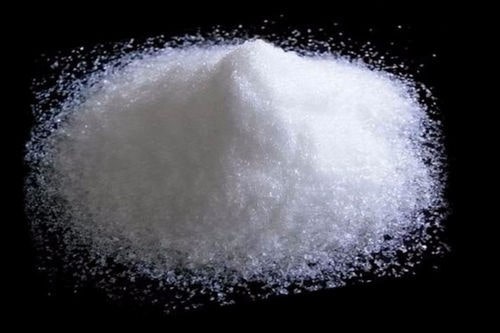

Heat treatment and surface metallurgy are among the most critical stages in the manufacturing lifecycle of industrial components. Within this domain, the application of sodium nitrate in hardening and heat treatment of steels holds an established, prominent position. Metallurgical engineers and heat treatment specialists continuously seek methods that guarantee uniform heat transfer, minimal dimensional distortion, and controlled cooling rates. Molten salt baths formulated with nitrates represent one of the most efficient solutions to achieve these engineering objectives.
With its stable chemical structure, sodium nitrate displays predictable behavior in the molten phase. Combined with other nitrogenous compounds, this chemical makes it possible to engineer thermal baths with broad operational temperature windows and optimal fluid dynamics. This technical article thoroughly examines the role of sodium nitrate across various hardening processes, heat transfer mechanisms, engineering advantages over conventional quenching media, and operational maintenance and safety requirements.
Structure and Nature of Molten Salt Baths in Heat Treatment
Molten salt baths are liquid media formulated by melting controlled mixtures of inorganic salts. These baths serve to heat metallic components within an air-isolated liquid atmosphere or to execute rapid, controlled cooling (quenching). As a primary constituent in this class of inorganic formulations, sodium nitrate establishes an ideal medium for homogeneous heat transfer across complex component geometries.
Compared to atmospheric or vacuum furnaces, molten salt exhibits significantly higher specific heat capacity and thermal conductivity. When a part is immersed into the molten bath, all of its surfaces experience identical heat transfer rates. This uniform behavior prevents stress concentrations, the formation of undesirable phases, and thermal distortion caused by severe temperature gradients.
Sodium nitrate is utilized either in pure form or within eutectic formulations. Incorporating additives such as sodium nitrite into these systems substantially lowers the melting point and enhances melt fluidity at lower operating temperatures. This characteristic is vital for processes such as tempering and austempering.
Mechanisms of Sodium Nitrate Application in Hardening Operations
In advanced metallurgical processing, target hardness cannot be achieved merely by austenitizing followed by abrupt quenching in water or oil. Critical engineering components—such as gears, springs, cutting blades, and rotating shafts—require high hardness coupled with superior toughness and fracture resistance. The application of sodium nitrate in hardening operations is primarily demonstrated in two distinct thermal cycles: austempering and martempering.
In austempering, following austenitization, the component is immediately quenched into a molten nitrate salt bath held at a temperature just above the martensite start (Ms) temperature. The workpiece is held isothermally at this temperature until complete transformation into a bainitic microstructure occurs. Due to its high fluidity and excellent surface wetting, the molten salt extracts heat rapidly from the part, suppressing the formation of pearlite or proeutectoid ferrite.
In martempering (marquenching or stepped hardening), the component is quenched in a nitrate bath to a temperature slightly above the Ms point and held until the core and surface equalize in temperature. Once thermal equilibrium is reached, the steel is cooled slowly in air to transform into martensite with minimal residual stress. The thermal stability of sodium nitrate allows tight process temperature control within a few degrees Celsius, which is essential for achieving precise microstructural targets.
Tempering and Drawing Processes Using Nitrate Salt Baths
Hardening steel without subsequent tempering (drawing) leaves the process incomplete, as the as-quenched martensitic phase is inherently brittle and prone to catastrophic cracking. Tempering relieves internal stresses and enhances ductility, requiring strictly controlled, stable temperature windows. The technical rationale for utilizing sodium nitrate in this phase includes:
- Exceptional Temperature Uniformity: Bath temperatures are distributed evenly throughout the entire vessel, eliminating cold or hot spots commonly encountered in forced-air furnaces.
- Protection Against Surface Oxidation: The molten salt blanket prevents atmospheric oxygen from contacting the hot metallic surface, eliminating the risk of surface decarburization.
- Effortless Post-Treatment Cleaning: The thin nitrate salt film remaining on the component surface upon withdrawal is highly soluble in hot water, requiring no complex chemical solvents for washing.
- Rapid Thermal Exchange: The dwell time required for the component to achieve the target temperature is significantly shorter than in gas-fired systems, generating substantial energy savings.
To fine-tune melting points and viscosity, industrial facilities often blend this salt with other inorganic chemicals and stabilized formulations to maximize the operational service life of the heat treatment bath.
Technical and Economic Advantages of Sodium Nitrate over Quench Oils
Quenching oils have historically served as a conventional cooling medium for steel components, yet their use involves notable technical limitations. The most prominent drawback is the formation of an unstable vapor blanket (Leidenfrost phenomenon) around the component upon immersion, resulting in non-uniform heat extraction. On asymmetric components, this thermal disparity induces severe warping, distortion, and microcracking.
In contrast, molten salt baths based on sodium nitrate do not form a vapor blanket. Direct liquid-to-solid contact is sustained across all angles, fillets, and internal cavities, facilitating rapid conductive and convective heat transfer. Consequently, thermal stresses are reduced to an absolute minimum.
From an economic perspective, nitrate salts do not vaporize and eliminate the fire hazards associated with flammable oil vapors in workshop environments. Under proper operating procedures and contamination control, these baths offer an exceptionally long operational lifespan, requiring only periodic salt replenishment to compensate for drag-out losses.
Quality Control Parameters and Maintenance of Hardening Salt Baths
Successful execution of the application of sodium nitrate in hardening relies on maintaining the physical and chemical integrity of the melt over continuous production cycles. Furnace operators and metallurgical laboratory personnel must routinely monitor several key parameters:
Sludge Accumulation and Degradation Products
At elevated operating temperatures, sodium nitrate exhibits a very slow tendency to decompose into nitrite with the release of trace oxygen. Furthermore, the ingress of surface mill scale and oxides from untreated parts can form sludge at the bottom of the crucible. Systematic dredging and removal of these bottom deposits are required to preserve bath thermal capacity and maintain proper convection currents.
Melt Viscosity and Density Monitoring
Minor shifts in chemical composition—caused by differential drag-out or surface evaporation of specific constituents—can alter liquid viscosity. Elevated viscosity impedes rapid surface wetting and increases drag-out consumption per treated component. Periodic compositional analysis and the addition of corrective salts stabilize fluid behavior and bath longevity.
Critical Safety Considerations for Molten Nitrate Salts
While sodium nitrate is chemically stable at ambient conditions in its solid form, it acts as a strong oxidizer in the molten state at heat treatment temperatures. A rigorous understanding of these reactions is paramount for safeguarding operational personnel and production equipment.
The single greatest hazard confronting molten salt baths is the introduction of moisture. Water introduced on damp components into a bath operating well above 100 °C flashes instantly to steam, expanding violently in volume. This explosive vapor expansion causes hazardous molten salt splattering or catastrophic mechanical containment failure. Therefore, all components and fixtures must be thoroughly preheated and completely dried prior to bath immersion.
In addition to moisture, introducing organic materials—such as grease, drawing lubricants, rags, or sawdust—into molten nitrate baths is extremely hazardous. Rapid oxidation reactions between molten nitrate salts and hydrocarbons are highly exothermic and can turn uncontrollable. Hardening bath environments must be kept clean, dry, and strictly isolated from solvents, combustibles, or reactive chemicals at all times.
Conclusion and Industrial Outlook
Sodium nitrate remains a strategic chemical component in modern metallurgy and precision heat treatment. Its rapid, uniform heat transfer, prevention of component distortion, complete water solubility during post-wash cycles, and facilitation of precise phase transformations such as bainite make it an indispensable standard in hardening and tempering baths. Optimizing the utilization of this inorganic compound through strict process control standards and rigorous safety procedures guarantees enhanced fatigue performance and mechanical reliability for critical industrial components.