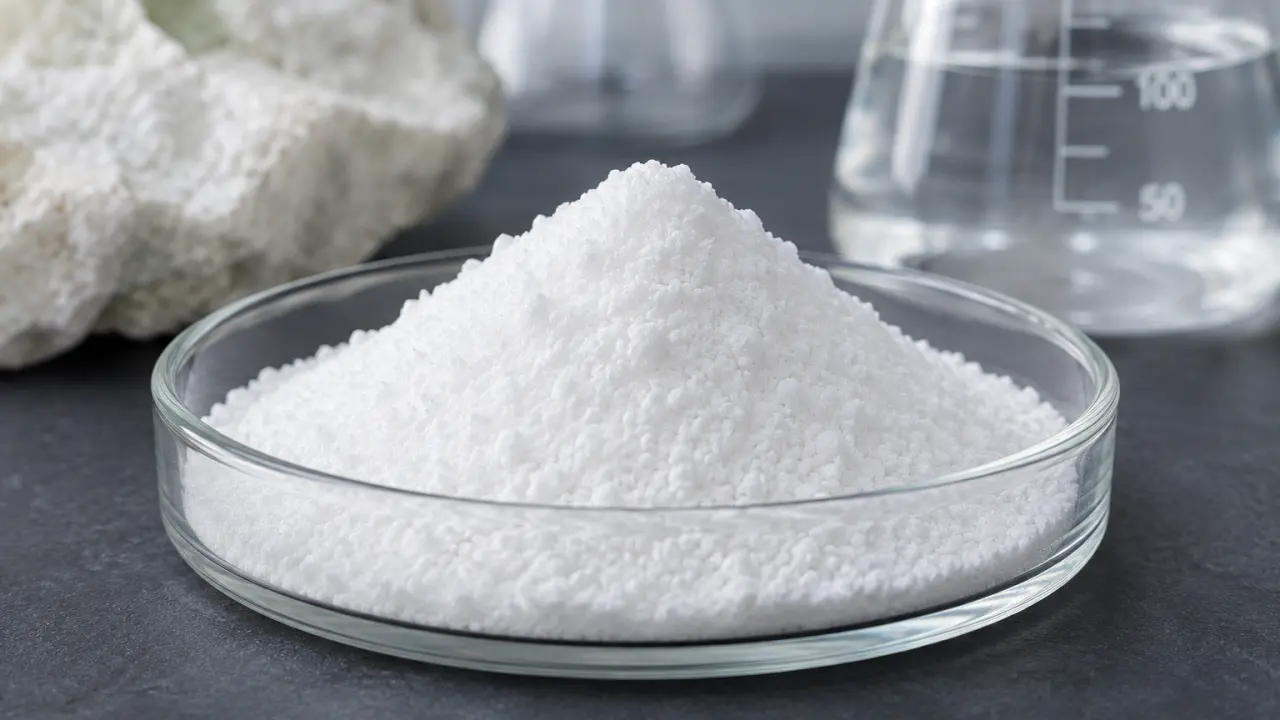

Metallurgical and metal-finishing industries continually rely on chemical compounds that enhance mechanical properties and surface resistance in manufactured components. In this domain, the application of sodium cyanide in case hardening and electroplating represents an essential, established technique in surface finishing. Sodium cyanide, with the chemical formula NaCN, is a highly reactive inorganic salt. Its capacity to form stable coordination complexes with metal ions and to release active carbon and nitrogen at high temperatures has earned it a prominent position in electroplating and thermochemical heat treatment.
Metallurgical engineers and metal-finishing specialists harness these unique properties to elevate surface hardness, wear resistance, and visual quality in critical automotive parts, industrial tooling, and mechanical components. This guide examines the technical aspects, chemical mechanisms, and safety requirements governing the use of this compound in surface hardening and electroplating operations.
Role and Mechanism of Sodium Cyanide in Metal Electroplating
The electroplating industry depends on achieving a uniform, adherent deposition of a thin metal layer over a substrate. Producing a pore-free, bright, and corrosion-resistant deposit demands precise control over the concentration of free metal ions in the electrolyte. In electroplating baths, sodium cyanide functions as a potent chelating and complexing agent.
When metal salts such as copper, zinc, gold, or silver dissolve in water, they tend to deposit rapidly and form coarse, crystalline structures. The presence of sodium cyanide forms stable cyanide complexes. These complexes depress the concentration of free metal ions and shift the cathode potential toward more electronegative values. As a result, the plating reaction yields extremely fine grain structures, dense crystallization, and a uniform, highly lustrous surface finish on the workpiece.
Additionally, cyanide ions impart a mild in situ degreasing and cleaning effect during deposition, ensuring robust adhesion of the plated layer. Consequently, cyanide electrolytes deliver exceptional throwing power and coverage, even on workpieces characterized by complex geometry and sharp internal angles.
Copper and Copper Alloy Plating Using Cyanide Baths
Cyanide copper baths represent one of the most widespread industrial uses of cyanide compounds. When plating directly onto steel or zinc die-cast (Zamak) substrates, acidic copper formulations cannot be applied directly because spontaneous displacement reactions cause non-adherent, peeling deposits.
A cyanide copper bath serves as an essential strike layer or intermediate barrier, establishing a strong metallurgical bond between the steel base and subsequent plated layers. In bath formulations, controlling the ratio of free cyanide to copper is critical: insufficient free cyanide causes dull, rough coatings and impedes anode dissolution, whereas excessive free cyanide lowers cathode current efficiency.
Applications in Zinc, Silver, and Gold Plating
In industrial zinc electroplating, alkaline cyanide baths deliver unmatched throwing power for threaded fasteners and complex tooling. While non-cyanide alternatives have been developed, the structural integrity and coverage of cyanide-based deposits remain preferred for critical automotive components.
For precious metal finishing involving gold and silver, sodium cyanide remains the primary industry standard. The formation of dicyanoargentate and dicyanoaurate complexes enables the deposition of exceptionally uniform coatings with high electrical conductivity and superior contact wear resistance for electronic applications. Metal-finishing technicians stabilize bath alkalinity by using products from the bases and alkalis category alongside cyanide salts.
Sodium Cyanide in the Case Hardening of Steel Components
Thermochemical case hardening is a critical manufacturing stage for mechanical components exposed to high loads and friction. Gears, camshafts, and pins require a ductile, impact-resistant core coupled with an exceptionally hard, wear-resistant outer case. Alongside conventional methods utilizing inorganic salts and gas nitriding, molten cyanide salt baths provide one of the most effective liquid case hardening techniques.
In this process, known as liquid cyaniding or liquid carbonitriding, steel workpieces are immersed in a molten salt bath in which sodium cyanide serves as the primary active ingredient. At operating temperatures between 780 °C and 900 °C, the compound reacts with atmospheric oxygen to liberate nascent carbon and nitrogen.
Carbon and Nitrogen Diffusion Mechanisms into the Steel Surface
At operating temperatures, sodium cyanide oxidizes at the surface of the bath in the presence of air to form sodium cyanate:
$$2\text{NaCN} + \text{O}_2 \rightarrow 2\text{NaCNO}$$
The resulting cyanate is unstable at the bath-workpiece interface and decomposes, liberating carbon monoxide and nascent nitrogen:
$$4\text{NaCNO} \rightarrow \text{Na}_2\text{CO}_3 + 2\text{NaCN} + \text{CO} + 2\text{N}$$
The carbon monoxide subsequently dissociates at the catalytic iron surface, diffusing active carbon directly into the austenite lattice of the steel:
$$2\text{CO} \rightarrow \text{CO}2 + \text{C}{(\text{Fe})}$$
Concurrently, nascent nitrogen diffuses into the crystal lattice, forming interstitial nitrides. Simultaneous diffusion of carbon and nitrogen allows the component to achieve targeted case depths and hardness faster than gas or pack carburizing. Furthermore, dissolved nitrogen enhances hardenability, allowing milder quenchants to be used to minimize dimensional distortion.
In selected ferritic nitrocarburizing cycles or post-quench cooling baths, compounds such as sodium nitrite are utilized in adjacent salt pots for metallurgical conditioning or controlled black oxidation.
Advantages of Cyanide Salt Bath Hardening
Liquid cyaniding offers distinct processing advantages for high-volume manufacturing lines and distortion-sensitive components:
- High Heat Transfer Rates: Complete immersion in molten liquid provides uniform thermal input across the workpiece, shortening soak times.
- Uniform Case Depth: The molten liquid penetrates blind holes, internal recesses, and fine threads, producing consistent diffusion layer thickness.
- Reduced Component Distortion: Thermal shock is mitigated compared to direct flame heating or induction scanning methods.
- Decarburization Protection: The molten salt envelope acts as a physical barrier, isolating the steel surface from ambient air and preventing scaling and surface carbon loss.
Technical Maintenance of Plating and Heat-Treatment Baths
Maximizing the performance of sodium cyanide while preventing premature bath degradation requires rigorous control of chemical parameters. In electroplating operations, free cyanide concentrations must be quantified through daily titration. The gradual oxidation and breakdown of cyanide into carbonates via reaction with atmospheric carbon dioxide is an inevitable process; excessive carbonate build-up increases solution viscosity and impairs plating efficiency.
In case-hardening baths, the sodium cyanide concentration is maintained within specified limits to balance carbon and nitrogen release rates. As cyanide is consumed during high-temperature cycles, replenishing salts are added periodically to the melt. Additionally, preventing excessive surface dross and oxidation through the use of floating graphite covers improves thermal efficiency and retards bath aging.
Throughout these industrial chemical systems, sourcing quality raw materials—such as compounds classified under inorganic chemicals—is essential for buffering, scale prevention, and balancing auxiliary metal ion concentrations.
Safety Principles, Hazards, and Cyanide Wastewater Management
Sodium cyanide is an acutely toxic chemical that inhibits cellular respiration via cytochrome c oxidase inactivation. Safe handling demands rigorous operational protocols. The most critical operational hazard is accidental contact between cyanide solutions and acidic media. In metal pretreatment lines where inorganic acids are routinely used for pickling and descaling, dragging unrinsed acidic parts into cyanide tanks or cross-contaminating drain lines can cause lethal events.
Acidic environments with a pH below 9 cause rapid conversion of cyanide ions into volatile, deadly hydrogen cyanide (HCN) gas. Consequently, cyanide plating solutions must strictly maintain an alkaline pH, typically above 11. Dedicated local exhaust ventilation (LEV) systems above all plating tanks and salt bath furnaces must operate continuously.
Personal protective equipment (PPE) for bath operators includes heavy-gauge nitrile or neoprene gloves, full-face splash shields, chemical-resistant suits, and respiratory protection fitted with specialized cyanide-rated cartridges. First-aid kits stocked with approved cyanide antidotes and emergency medical oxygen units must be positioned directly adjacent to operational areas.
Cyanide Wastewater Treatment and Destruction
Rinsewaters from plating processes and spent quench sludge containing molten salts must not enter public sewer systems or natural waterways. The primary industrial standard for detoxifying cyanide effluent is alkaline chlorination.
In this approach, sodium hypochlorite or chlorine gas is added in two distinct, sequential stages to oxidize cyanides into non-toxic compounds:
- In the first stage, maintaining a pH above 10, cyanide is oxidized to cyanate. Strict pH control is mandatory here to prevent the generation of toxic cyanogen chloride gas.
- In the second stage, the pH is reduced to approximately 7.5 to 8.5, completing the oxidation of cyanate into harmless carbon dioxide and nitrogen gases.
Continuous monitoring with calibrated oxidation-reduction potential (ORP) sensors and pH electrodes ensures full degradation of cyanide species before discharge, eliminating environmental compliance risks.
Conclusion
Despite its toxicity hazards, sodium cyanide remains a critical chemical compound in surface engineering, precision electroplating, and thermochemical case hardening due to its unmatched chemical and electrochemical performance. Its capacity to form stable coordination complexes and provide balanced, rapid diffusion of carbon and nitrogen enables manufacturers to produce surfaces with superior hardness, low friction, and outstanding corrosion protection. Strict adherence to chemical engineering practices, continuous bath maintenance, and comprehensive wastewater treatment systems ensures safe and efficient industrial utilization of this reagent.