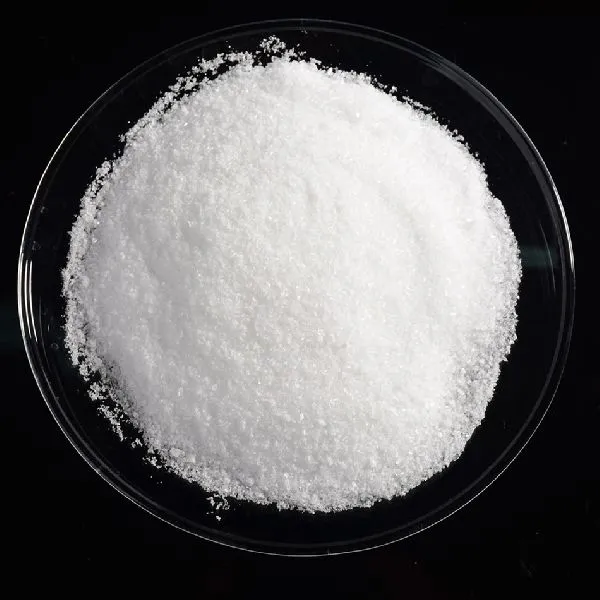

Concreting in cold climates and winter conditions has always posed a fundamental challenge for civil engineers, project contractors, and geotechnical and concrete testing laboratories. A drop in temperature below the freezing point slows down or completely halts the hydration of cement silicates, while ice crystal formation within fresh cement paste disintegrates the integrity of the concrete matrix. Under such conditions, chemical accelerating and freezing-point-depressing admixtures become essential. A scientific assessment of the application of calcium nitrate in concrete antifreeze demonstrates how this non-chloride compound plays a critical role in preserving structural integrity and accelerating the setting of cement paste.
Chemistry of Cement Hydration and the Freezing Temperature Challenge
Ordinary Portland cement relies on exothermic chemical reactions to set and develop its final binder strength. Under normal conditions, the primary cement phases—such as tricalcium silicate and dicalcium silicate—react with water to form calcium silicate hydrate (C-S-H) gel. This structure is primarily responsible for compressive and tensile mechanical strength.
When ambient temperatures drop below 5 °C, the rate of ion dissolution and the subsequent formation rate of C-S-H gel decline markedly. If mixing water freezes before the concrete attains its critical threshold strength, the roughly 9% volume expansion of water inside capillary pores causes irreversible microcracking. To manage these critical conditions, specifiers incorporate specialized classes of inorganic chemicals, particularly accelerators, into the mix design.
Role and Application of Calcium Nitrate in Concrete Antifreeze
Many manufacturers of plasticizers and silica fume slurries incorporate this inorganic salt into winter admixture formulations. The application of calcium nitrate in concrete antifreeze centers on two primary mechanisms: accelerating the exothermic cement hydration reaction and depressing the freezing point of the liquid phase. By elevating the concentration of calcium ions in the pore solution, the hydration of both aluminate and silicate phases speeds up, significantly shortening initial and final set times.
This performance allows concrete to retain internal heat during the critical early hours after placement and rapidly achieve threshold frost-resistance strength. Belonging to the broader family of nitrates, this compound provides outstanding thermal and physical stability within the concrete paste, ensuring safe curing and strength development.
Chloride-Based vs. Chloride-Free Antifreezes
Historically, calcium chloride served as the most economical set-accelerating admixture for cold-weather concreting. However, introducing chloride ions into reinforced concrete poses severe risks to structural steel:
- Chlorides break down the passive oxide layer on the rebar surface, initiating localized pitting corrosion.
- Steel oxidation generates expansive corrosion products, resulting in concrete cover spalling, cracking, and delamination.
- International building codes and standards strictly limit or prohibit chloride use in reinforced and prestressed concrete.
Conversely, formulating admixtures with halogen-free inorganic salts such as calcium nitrate introduces zero corrosion risk to reinforcing rebar, ensuring long-term structural service life.
Mechanism of Steel Corrosion Inhibition by Calcium Nitrate
A defining technical characteristic of this compound is its ability to inhibit electrochemical metal degradation. When calcium nitrate is used in concrete antifreeze formulations, nitrate ions act as a powerful anodic inhibitor. Nitrate ions interact with iron oxides at the steel-concrete interface to passivate and stabilize the protective surface film.
This imparts a twofold advantage: the mix achieves rapid setting and frost protection, while simultaneously gaining long-term protection against external aggressive agents such as atmospheric carbon dioxide and deicing salts. In advanced formulations, chemical manufacturers also utilize synergistic blends with compounds like sodium nitrite to enhance corrosion inhibition performance further.
Effects of Calcium Nitrate on Physical and Mechanical Properties of Concrete
Incorporating this compound into concrete affects both the rheological properties of the fresh mix and the mechanical performance of the hardened matrix. Accelerated ion dissolution and hydrate formation yield a denser cement microstructure and lower capillary porosity, delivering several engineering benefits.
Early-Age Compressive Strength
A primary objective in winter concreting is earlier formwork removal to maintain project schedules. Laboratory testing confirms that nitrate-induced acceleration markedly improves 12-hour, 24-hour, and 3-day compressive strengths. By reaching early design strength ahead of schedule, the vulnerability of concrete to freeze-thaw cycles is minimized.
Workability and Concrete Fluidity
Calcium nitrate does not adversely affect slump or workability when used on its own, and it shows excellent compatibility with polycarboxylate ether (PCE) and lignosulfonate superplasticizers. This compatibility enables chemical formulators to integrate it seamlessly into liquid or powdered antifreeze packages without compromising rheological stability.
Reduction of Bleeding and Efflorescence
Bleeding tends to increase in cold weather due to prolonged setting times, producing a weak, porous surface layer with poor abrasion resistance. Accelerating hydration through nitrate salts drastically cuts the residence time of free standing water. Consequently, bleeding is restrained, preventing surface dusting, weak laitance layers, and efflorescence.
Operational and Storage Considerations in Industrial Projects
For quality control personnel and concrete contractors, proper dosing and batching methods for nitrate-based antifreezes are essential. Calcium nitrate admixtures should generally be dosed along with the gauging water or introduced at the end of the batching sequence into the truck mixer to guarantee uniform distribution throughout the batch. Liquid or dry admixtures should never be discharged directly onto dry aggregates or unhydrated cement.
On construction sites, bulk liquid antifreeze must be stored away from direct intense sunlight and protected from extreme low temperatures that could induce precipitation or crystallization. Adhering strictly to standardized mix designs and utilizing precision dosing equipment are imperative for consistent, repeatable results.
Summary and Conclusion
Given the risks of cold-weather concrete placement and stringent standards regarding rebar protection, calcium nitrate represents an optimal engineering solution for concrete antifreeze formulations. By accelerating hydration, releasing internal exothermic heat, physically protecting pore water from freezing, and passivating reinforcing steel against corrosion, it stands as the industry benchmark for non-chloride accelerators. Proper specification and dosage under engineering supervision guarantee high early strength, durability, and extended service life for concrete infrastructure under the most demanding winter conditions.