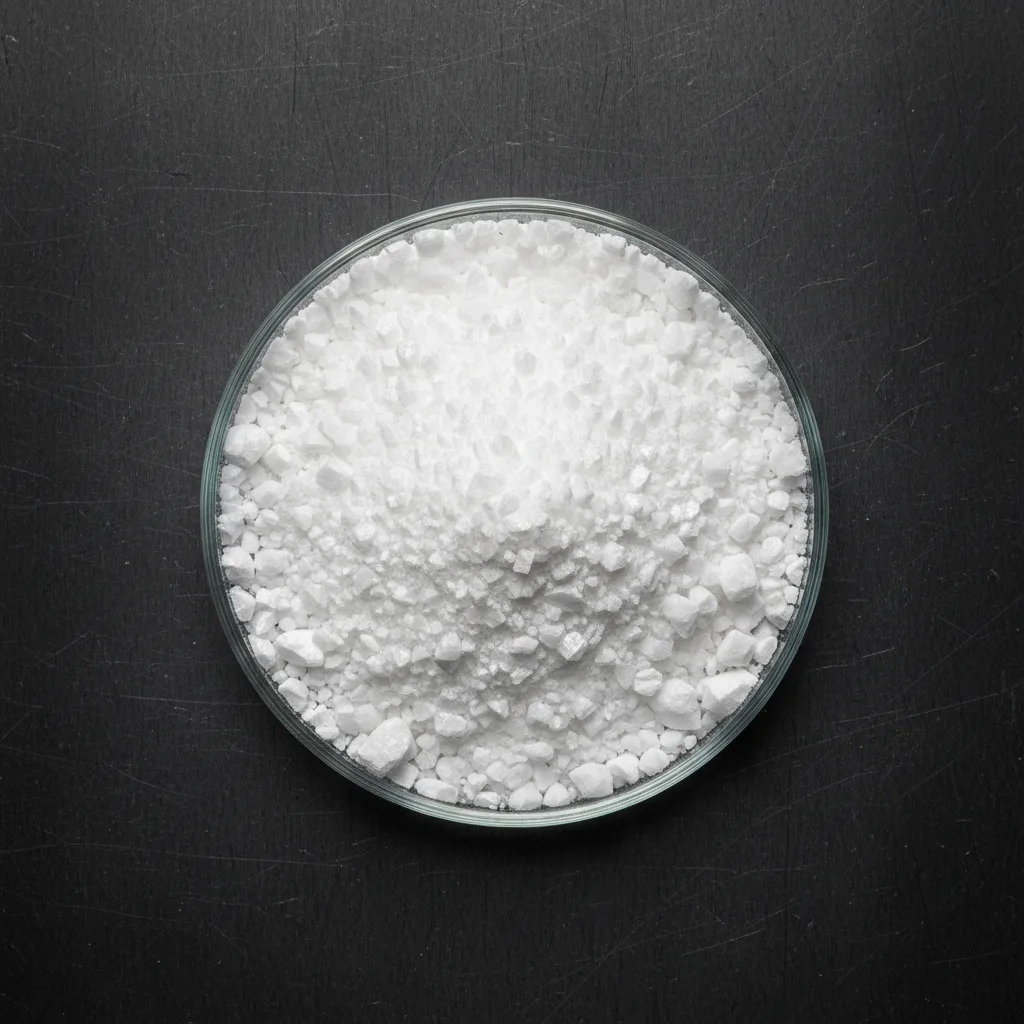
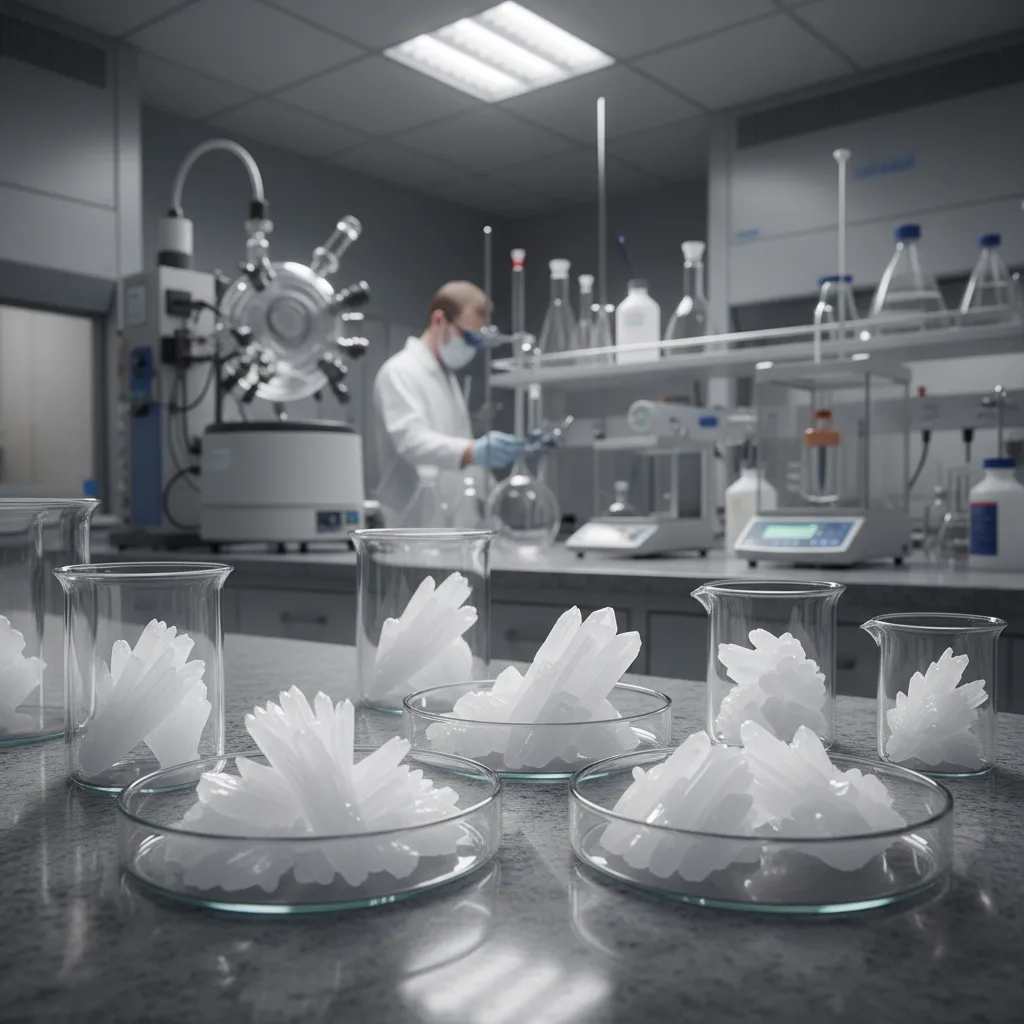
Potassium nitrate is a strategic inorganic salt across diverse industries such as agriculture, pharmaceuticals, metallurgy, and glassmaking. Manufacturing potassium nitrate—whether at research and laboratory scale or in large petrochemical volumes—requires a deep understanding of phase equilibria, reaction kinetics, and solubility curves. The selection of process optimization parameters directly impacts final purity, economic yield, and production cycle safety. This technical article evaluates the various aspects of synthesis, separation techniques, and industrial production methods for this salt.
Strategic Importance and Applications of Potassium Nitrate
This ionic compound is known by the chemical formula KNO3 and, due to its favorable stability and good solubility, serves as an ideal source for simultaneously supplying nitrogen and potassium. Utilizing this compound in hydroponic and horticultural fertilizer formulations plays a foundational role in plant nutrition. Furthermore, its oxidizing properties have secured its established position in advanced glass manufacturing, ceramic glazes, and metal heat-treatment formulations. Chemical engineers continually focus on crystal purity and the elimination of interfering ions when commissioning production lines.
Chemical Fundamentals and Potassium Nitrate Synthesis Reactions
The synthesis of this salt is based on displacement reactions or ion exchange between precursors containing potassium ions and the nitrate radical. In inorganic chemical theory, multiple reactions can lead to the formation of this product; however, selecting the appropriate route depends on raw material costs and the ease of phase separation. Among the broad family of nitrates, potassium-bearing derivatives display unique crystallization behavior due to their sharp solubility contrast between cold and hot temperatures.
One of the most common reaction pathways involves combining nitric acid with potassium bases such as potassium hydroxide or potassium carbonate. This exothermic acid-base neutralization serves as the most fundamental route for forming the ionic bond between the respective ions. In this reaction, the only by-products are water or carbon dioxide, making the purification process substantially simpler than reactions that generate salt by-products. Nonetheless, using concentrated nitric acid requires heightened corrosion-resistance considerations for process equipment.
Another route traditionally pursued at the laboratory scale is the metathesis of soluble salts such as ammonium nitrate and potassium chloride. This approach attracts interest in certain research facilities due to the ready availability of starting materials. Here, solubility diagrams play a pivotal role in extracting the final solid phase to prevent the co-precipitation of secondary salts while maintaining high yields.
Industrial Production Methods of Potassium Nitrate
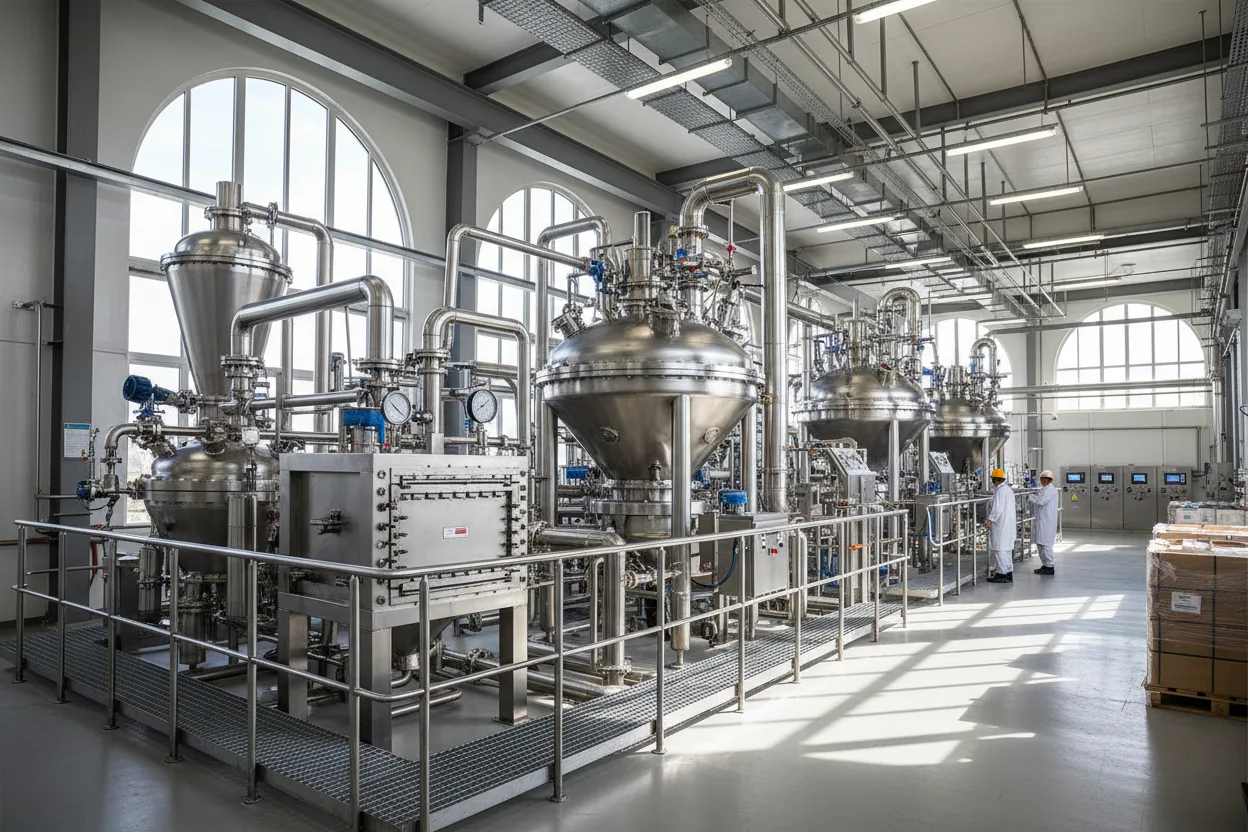
The commercial development of production methods for this compound has always been driven by raw material economics. In industrial settings, the direct use of potassium hydroxide is rarely a primary option due to its high cost. Consequently, the chemical industry turns to routes utilizing more cost-effective precursors, such as potassium chloride or nitrate-rich mineral ores. Advanced manufacturers operating in the potassium nitrate market frequently employ continuous reactors and closed-circuit crystallization loops to optimize efficiency.
1. Ion Exchange Process Using Potassium Chloride and Sodium Nitrate
This reaction is the most common industrial route in chemical plants, relying on a double displacement reaction:
NaNO3 + KCl → KNO3 + NaCl
In this process, the reaction mixture is dissolved at elevated temperatures and subsequently subjected to controlled cooling. The solubility curve of sodium chloride in water shows very little change with temperature fluctuations, whereas the solubility of the target product drops steeply as the temperature decreases. Therefore, cooling the mixture causes crystals to precipitate while sodium chloride remains dissolved in the liquid phase. The resulting crystals are then isolated via industrial filtration and washed to enhance purity.
2. Direct Reaction of Nitric Acid with Potassium Chloride
In this method, also known as the IMI process, potassium chloride reacts directly with nitric acid:
KCl + HNO3 → KNO3 + HCl
This reaction liberates hydrochloric acid or a mixture of corrosive gases, requiring specialized organic solvents or liquid-liquid extraction systems to separate the acids. Technological complexity and the requirement for highly corrosion-resistant alloys restrict this route to sophisticated facilities. The resulting output is typically of exceptionally high quality, serving as a high-value-added salt in specialized industrial grades.
3. Neutralization Process with Potassium Carbonate
At smaller scales or for producing ultra-pure pharmaceutical and analytical grades, the reaction of potassium carbonate with nitric acid is utilized:
K2CO3 + 2HNO3 → 2KNO3 + CO2 + H2O
During this reaction, carbon dioxide gas is continuously evolved, yielding a clear solution of the target product. Given the absence of solid salt by-products, high-purity potassium nitrate is attained simply through water evaporation and solution cooling. Although more expensive in terms of raw materials, this process is highly reliable due to straightforward separation and the absence of complex recrystallization cycles.
Laboratory Synthesis of Potassium Nitrate and Operational Steps
Executing this process at the laboratory bench demands strict adherence to stoichiometric ratios and precise thermal parameter control. In a standard laboratory protocol, calcium nitrate or sodium nitrate is combined with potassium chloride in hot water. Calculating solvent volumes and initial concentrations is crucial to preventing the co-formation of impurities. Reviewing standard protocols in the guides section helps technicians minimize calculation errors.
- Thermal Dissolution of Raw Materials: Precursor salts are dissolved in the minimum required volume of hot distilled water to achieve a near-saturated solution.
- Reaction and Thorough Mixing: Solutions are combined at high temperature and stirred thoroughly with a magnetic stirrer for a set period to establish phase equilibrium.
- Initial Hot Filtration: If conducting reactions that produce sparingly soluble precipitates (such as calcium carbonate), the solution is filtered rapidly while hot.
- Gradual Cooling and Crystallization: The clarified solution is cooled slowly to ambient temperature and then placed in an ice bath to foster uniform crystal lattice formation.
- Separation, Washing, and Drying: The precipitated crystals are collected using a Büchner funnel and vacuum pump, washed with minimal amounts of ice-cold distilled water, and dried.
Controlling the cooling rate during crystallization governs particle size and the degree of impurity entrapment within the crystal lattice. Flash-cooling typically produces very fine crystals that may trap mother liquor within their aggregates. In contrast, gentle, controlled cooling promotes the growth of well-defined, needle-like crystals of significantly higher purity. Following washing, the salt is dehydrated in a temperature-controlled drying oven to yield a final product with optimal flowability.
Technical Challenges and Synthesis Process Quality Control
Manufacturing a standardized product requires continuous monitoring of anionic and cationic impurities, such as sodium, chloride, and sulfate. Residual chloride levels above specification in the final product severely undermine its performance in critical applications, particularly in fully soluble and drip-irrigation agricultural fertilizers. Consequently, purity testing via titration, conductometry, and atomic absorption spectroscopy is routinely performed on production batches. Regulating reaction pH is likewise essential to prevent the generation of nitrogen oxides or unwanted hydrolysis reactions.
Another challenge facing chemical engineers is the management of effluent and residual mother liquor from recrystallization. The mother liquor retains substantial concentrations of dissolved ions; discarding it directly results in economic losses and environmental contamination. Recirculating these liquors through the system to recover residual salts is a foundational step in modern plant design. Finally, the drying stage must be operated to prevent caking and particle agglomeration during storage.
Safety Considerations, Hazards, and Storage Standards
Although this compound is not combustible on its own, it is a powerful oxidizing agent. Under elevated temperatures, it liberates oxygen, which can violently accelerate the combustion of organic or reducing materials. Therefore, reaction and storage zones must be completely isolated from hydrocarbons, active metal powders, sulfur, and flammable materials. Proper reactor ventilation also prevents potential accumulations of chemical dusts or process-derived acid mists.
Operators and handling personnel must be equipped with personal protective equipment, including dust masks, chemical-resistant gloves, and protective eyewear. Dust contact with respiratory mucous membranes or eyes causes localized irritation requiring immediate flushing with abundant water. Product storage containers must be tightly sealed and kept away from ambient moisture, as moisture uptake degrades the physical and crystalline characteristics of the salt. Compliance with safety codes and storage guidelines ensures process stability and protects supply chain integrity.
Summary and Conclusion
The production of this strategic inorganic salt combines the principles of thermodynamic equilibrium and crystallization process engineering. Selecting among different reaction pathways—such as nitric acid neutralization or ion exchange with potassium chloride—is dictated by production capacity, purity requirements, and feedstock accessibility. Rigorous chemical engineering discipline in cooling profiles and impurity separation enables high yields and standardized product quality for downstream markets. A comprehensive grasp of these stages provides industrial stakeholders with the foundation needed to elevate quality and optimize the manufacturing chain.