
Nitrogen is the most fundamental nutrient in the plant growth cycle, playing a decisive role in the synthesis of proteins, nucleic acids, and chlorophyll. Among all chemical nitrogen carriers, urea stands out as one of the most vital compounds in organic chemicals. A thorough technical evaluation of urea in agriculture is paramount for agrochemists, farm managers, and fertilizer manufacturers. Understanding its chemical behavior in the soil profile and refining application strategies are essential drivers for improving commercial returns while minimizing environmental impact.
Operating under the chemical formula of carbonic diamide, urea currently accounts for the largest share of global nitrogen fertilizer consumption. Its exceptionally high nitrogen concentration reduces warehousing, freight, and distribution costs compared to competing solid nitrogen sources. Nevertheless, suboptimal agronomic handling can cause substantial nutrient losses and compromise soil health.
Chemical Properties and Structural Characteristics of Urea
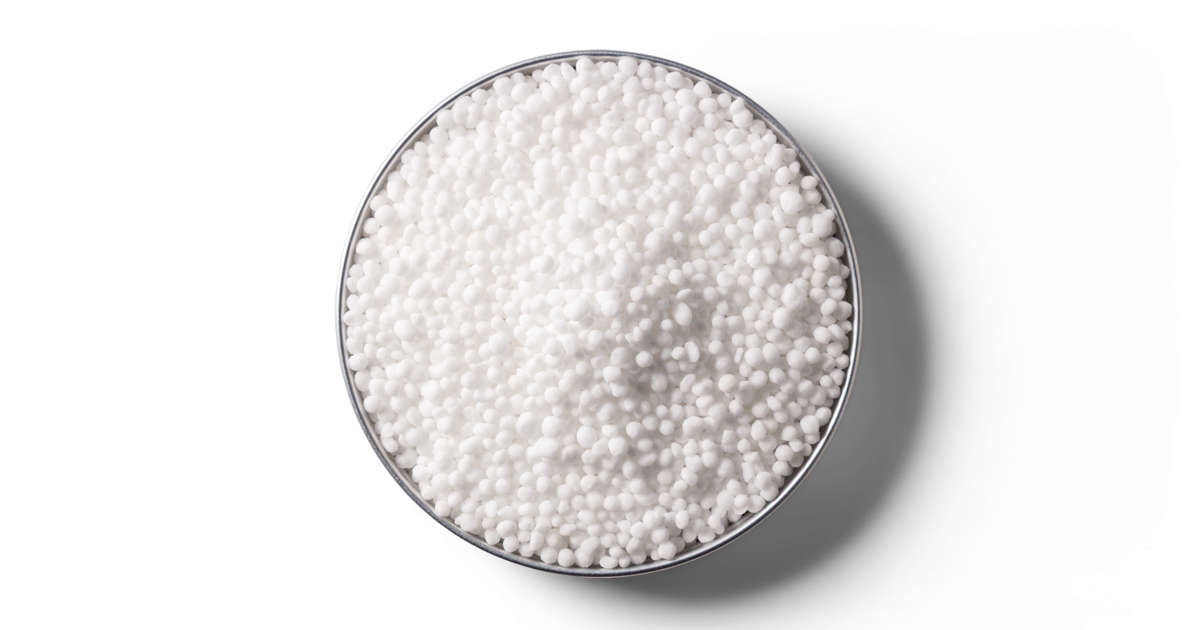
Urea is a low-molecular-weight organic compound containing carbonyl and amine functional groups, presenting industrially as white prills or granules. It features outstanding water solubility, which simplifies batch dissolution in fertilizer mixing tanks and modern liquid fertigation systems. In its initial state, unlike ionic salts, the urea molecule carries no net electrical charge and functions as a neutral chemical entity.
A critical quality parameter during urea synthesis and commercial handling is its biuret content. Biuret forms as an unwanted thermal condensation byproduct during prilling and granulation; elevated levels cause phototoxicity and damage emerging seedlings and tender foliage. For this reason, commercial agriculture and blenders mandate stringent purity thresholds and tight biuret specifications.
Within the soil-nutrient matrix, urea behaves differently from conventional inorganic salts and cannot be directly assimilated by plant roots in high volumes. Instead, it relies on microbial activity and a sequence of biochemical reactions to convert into plant-available ionic forms—namely ammonium and nitrate. This dynamic transformation depends directly on soil temperature, moisture content, and rhizosphere pH.
Soil Conversion Mechanism and Plant Uptake Dynamics
Once introduced into moist soil, urea undergoes rapid enzymatic hydrolysis catalyzed by ubiquitous soil urease. In the presence of adequate soil water, this reaction converts urea into ammonium carbonate. Being chemically unstable, ammonium carbonate rapidly dissociates into ammonium ions and gaseous carbon dioxide.
Under favorable aerobic conditions and adequate soil moisture, autotrophic nitrifying bacteria proceed with biological nitrification. Nitrosomonas species first oxidize ammonium into nitrite, followed by Nitrobacter species converting nitrite into nitrate. Nitrate represents the highly mobile, preferred nitrogen fraction taken up by the vast majority of row crops during rapid vegetative growth phases.
During initial hydrolysis, the localized soil pH directly adjacent to the fertilizer granule surges into alkaline territory. This transient micro-alkalinity drives a significant risk of ammonia gas volatilization into the atmosphere. Consequently, strategic management of placement depth and application timing is critical to the economic success of any nitrogen fertilization program.
Standard Application Methods of Urea in Agriculture
Multiple application techniques have been established for soil and crop management, depending on cultivation type, machinery access, and crop cycle requirements:
- Broadcast and Incorporation: The conventional approach where urea granules are uniformly spread over the field surface and immediately incorporated via light tillage or disc harrowing to prevent surface losses.
- Fertigation: Dissolving technical-grade urea into pressurized drip or pivot irrigation systems, simultaneously optimizing water and nutrient use efficiency.
- Banding or Deep Placement: Placing the fertilizer band at a calibrated soil depth near the seed furrow, insulating the compound from volatilization and directing nutrition to root zones.
- Foliar Spraying: Spraying a dilute solution of low-biuret urea over the crop canopy during specific windows when root uptake is constrained by cold soils or root architecture stress.
Disciplined management of each delivery method ensures maximized nitrogen uptake and minimized operational losses. Suboptimal application practices inevitably compromise overall nitrogen use efficiency (NUE) and escalate farm production costs.
Agronomic Advantages of Modern Urea Applications
The primary commercial advantage of urea lies in its concentrated nitrogen payload (typically 46% N), which delivers substantial operational savings across logistics, warehousing, and field distribution. Broad-acre operations rely heavily on urea to satisfy the baseline nitrogen demand of staple crops including wheat, corn, and rice. Its high dissolution rate also streamlines the preparation of concentrated liquid feed recipes.
Beyond operational economics, foliar absorption via leaf stomata presents a distinct agronomic benefit. Thanks to its neutral charge and compact molecular footprint, urea permeates the cuticular barrier faster than many charged ionic nitrogen carriers. This attribute proves advantageous during critical yield-building periods or when crops encounter abiotic stress.
Despite these advantages, agronomists routinely combine urea with complementary nutrient inputs. Formulations containing potassium, calcium, and essential secondary nutrients compensate for the lack of multi-element balance in straight urea. This balanced program maintains an optimal cation-anion ratio across the rhizosphere.
Challenges and Nitrogen Loss Pathways in Urea Management
Ammonia volatilization represents the most substantial operational loss mechanism associated with urea, especially across calcareous, light-textured sandy soils, and high-temperature environments. When urea remains unincorporated on dry soil surfaces lacking sufficient moisture to facilitate vertical diffusion, large fractions of nitrogen dissipate into the atmosphere as ammonia gas. This process reduces fertilizer return on investment and impacts ambient air quality.
Another challenge is nitrate leaching, which occurs downstream once urea has undergone complete nitrification into the nitrate form. Because nitrate anions carry a negative charge, they do not bind to negatively charged soil clay colloids. Consequently, excessive irrigation or unmanaged rainfall events wash mobile nitrate beyond the root zone, contributing to the contamination of groundwater reserves.
Furthermore, continuous and excessive reliance on urea can induce localized soil acidification over time. This acidification is an inherent outcome of the nitrification process, which releases hydrogen ions (protons) into the soil matrix. Continuous soil monitoring and remedial liming practices are often necessary to counter this long-term trend.
Urea vs. Nitrate-Based Fertilizers
While urea provides the most concentrated source of nitrogen by weight, specialized production systems, greenhouses, and soilless hydroponics frequently demand nitrates. Fertilizers such as potassium nitrate and calcium nitrate provide immediate, bioavailable nitrate-nitrogen that bypasses biological conversion delays. This rapid availability becomes decisive under low root-zone temperatures, where microbial urease and nitrification reactions stall.
Furthermore, during reproductive, flowering, and fruit-development stages, unmanaged urea feeding can stimulate excessive vegetative biomass at the expense of fruit firmness and post-harvest shelf life. In these critical stages, integrating dedicated nitrate solutions—such as those detailed in technical resources covering potassium nitrate—promotes carbohydrate translocation and elevates produce quality. Choosing between urea and nitrate carriers must hinge on crop phenology, physical soil characteristics, and end-market yield targets.
Nitrate fertilizers also offer superior agronomic predictability under saline conditions or high chloride stress. While urea can induce localized ammonia toxicity in poorly buffered soils, nitrate sources preserve root membrane integrity with reduced osmotic shock to sensitive young roots.
Strategies to Maximize Urea Use Efficiency
Achieving maximum efficiency when utilizing urea in agriculture demands the adoption of modern plant nutrition practices. One established approach is the deployment of chemical urease and nitrification inhibitors, which delay the rate of enzymatic hydrolysis, aligning nitrogen release profiles more closely with crop uptake demand.
Another advanced solution involves the use of controlled-release fertilizers, such as sulfur-coated or polymer-coated urea granules. These protective membranes regulate water ingress and meter out nutrient diffusion steadily throughout the vegetative cycle. This controlled release profile reduces the need for repeated top-dressings and curbs leaching risks.
Split application aligned with crop growth curves serves as a straightforward, highly effective field management technique. Rather than delivering the entire nitrogen allotment at planting, distributing total units across key growth stages—such as early vegetative growth, tillering, or grain filling—maximizes nitrogen assimilation. This targeted delivery avoids excessive salt loading and protects the long-term biological productivity of arable soils.
Conclusion and Future Outlook
Urea continues to serve as the bedrock of global agricultural nitrogen supply, supporting industrial crop yields and international food security. Gaining an engineering and agronomic command over its hydrolysis rates, micro-environmental pH shifts, and biological nitrification pathways ensures maximum return on input costs. By pairing balanced application schedules with alternative multi-nutrient carriers, professional growers can drive peak yields while safeguarding the physical and chemical vitality of their soils.